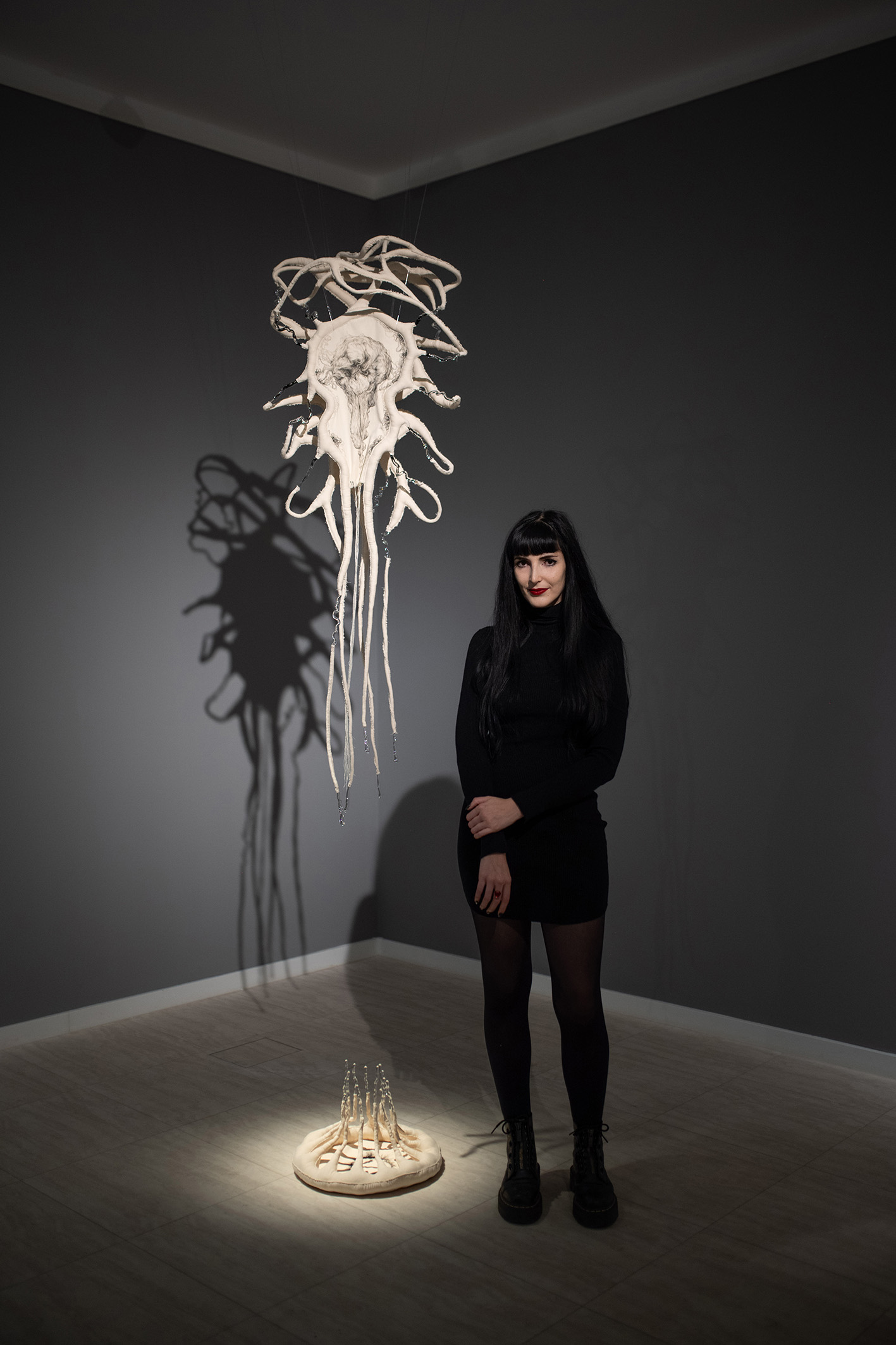
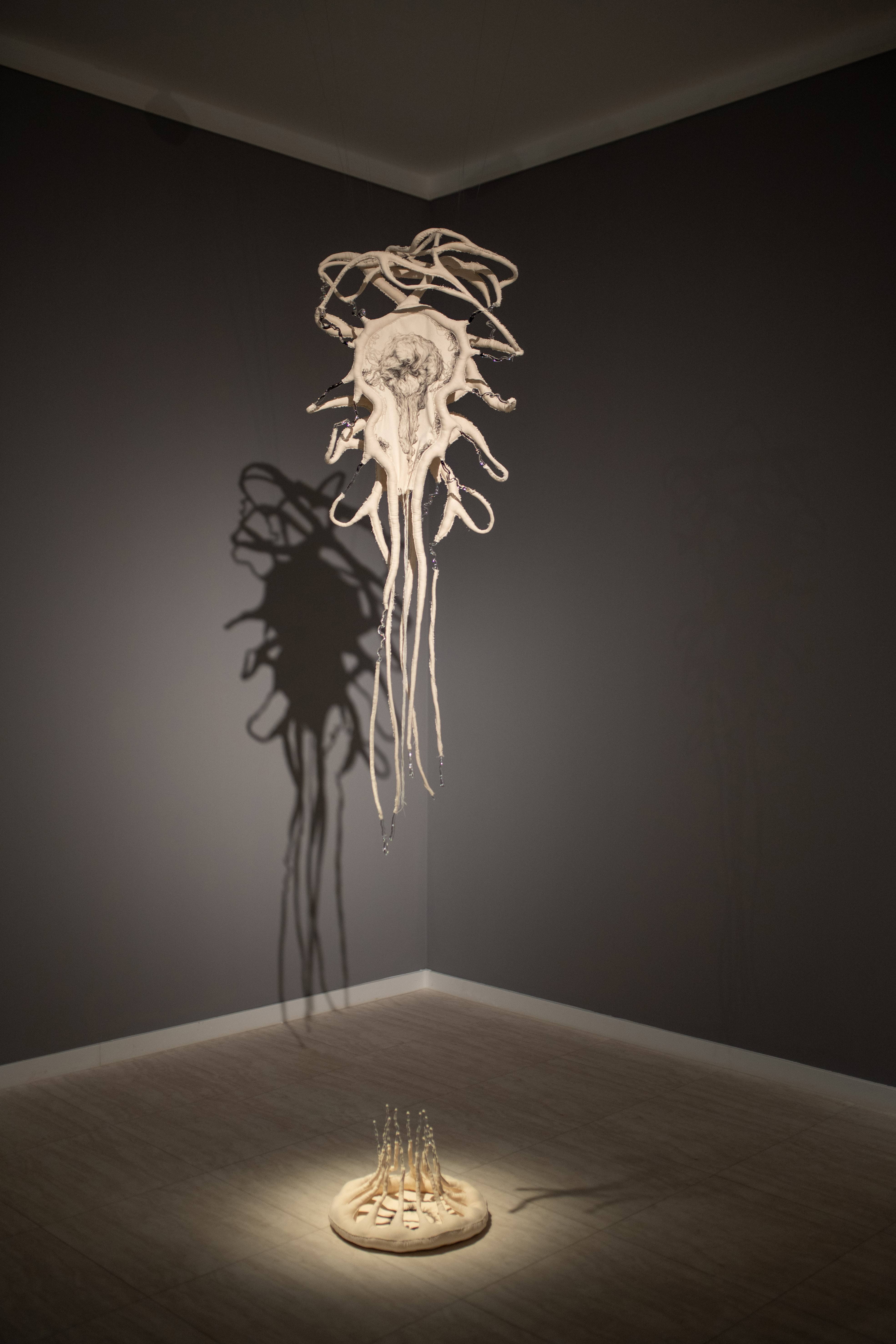
Fragile sanity – 2025
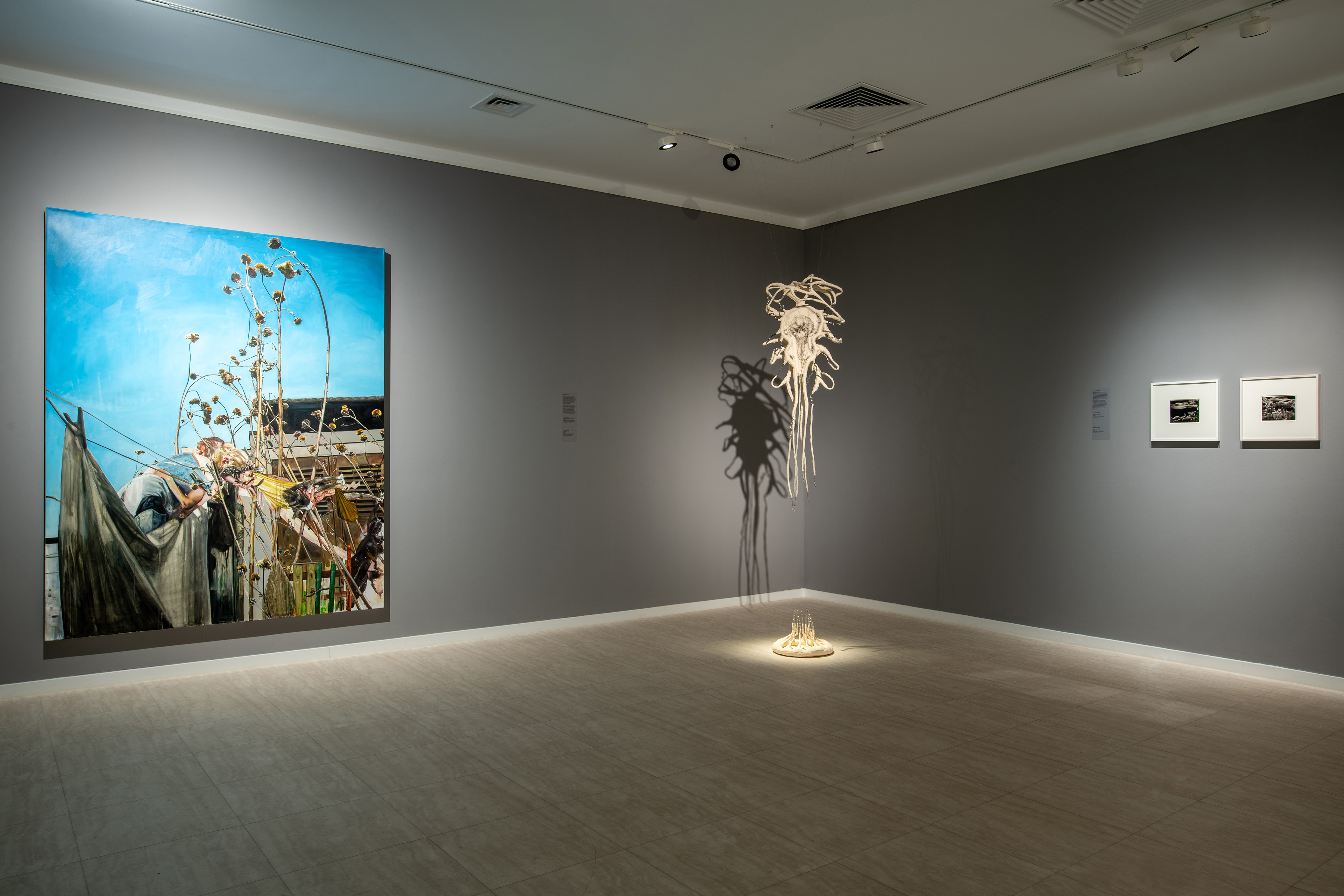
The installation was first presented in Graz, Austria at the group exhibition After Laughter, in a collaborative installation with Stella Koleszár.
After Laughter international group exhibition
Curated by Krisztián Kukla, Keyvan Paydar and Michael Schitnig
Venue: Schaumbad Atelier exhibition hall, 12.09. - 31.10. 2025.
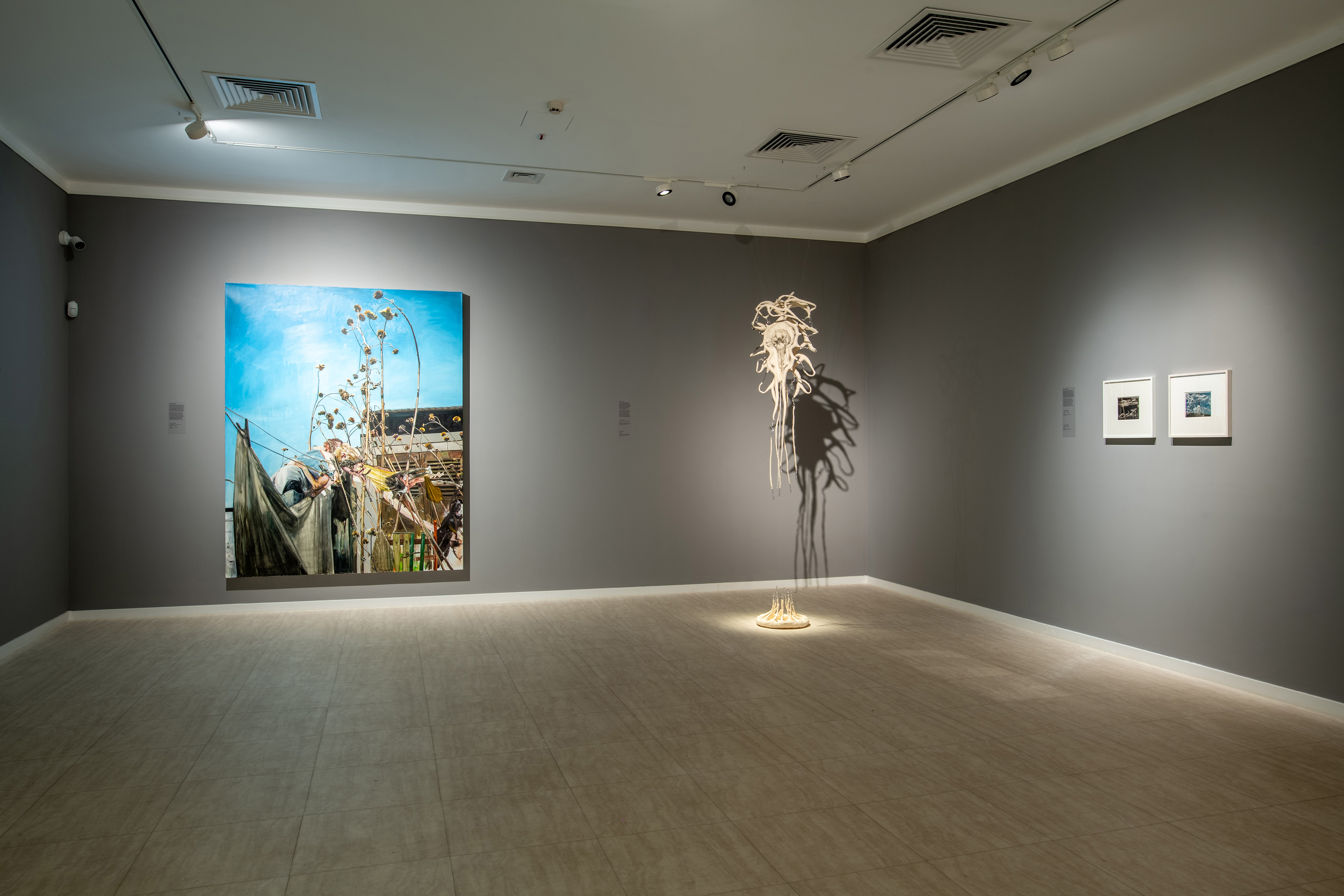
Later, I participated in another international group exhibition in Budapest, Hungary with my installation, where I supplemented it with a work created specifically for this exhibition titled "Drop catcher" and breathed new life into Fragile Sanity.
Access is of the beaten track international group exhibition
Curated by Zsófia Máté and Patrik Steinhauser
Venue: ArtHAB (Hungarian Art Business) in collaboration with Steinhauser Gallery, 25.11. 2025 - 15.02. 2026.
Fragile Sanity is a work by the artist duo lutum. Stella Koleszár and I became a duo after our first joint exhibition, Born of Slime and Decay. Our name derives from the Latin word lutum, meaning mud — a loose, stratified sediment closely connected to the motifs of water, transformation, and transition. We were both born and raised in Mohács, near the Danube; the organic world of floodplain forests and oxbow lakes is a defining source of inspiration for my practice and our shared way of thinking. Fragile Sanity is a spatial installation composed of two vertically connected elements, through which we explore the fragility of mental states, the complex functioning of the nervous system, and the sediment-like layering of time.
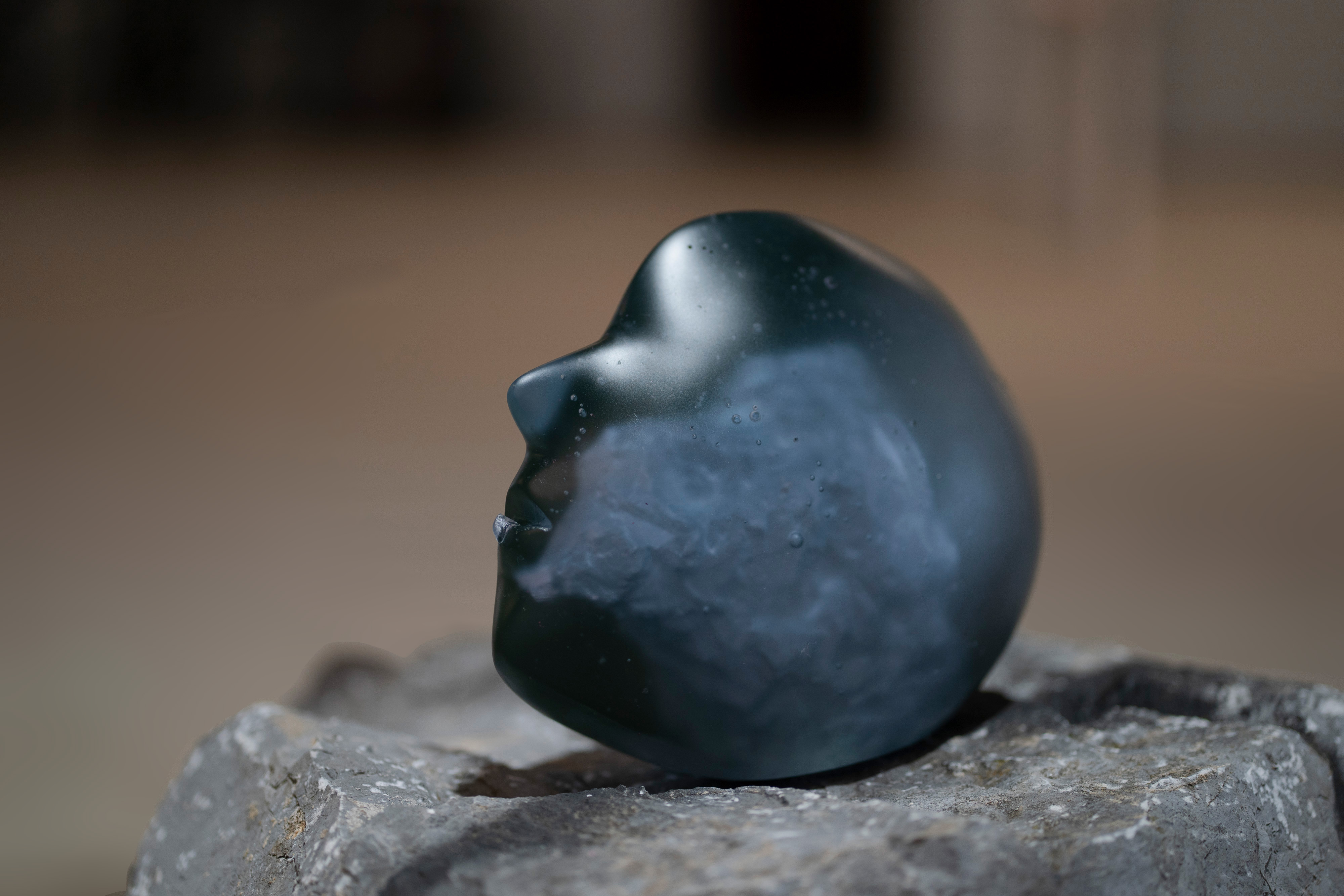
At the base of the installation lies a massive stone supporting a glass head. Stella created the head using an internal casting technique; inside it, layers of stone sediment, worn shells, and fossils adhere to the surface as imprints of time, memory, and petrified inner states. The conceptual starting point of the work is Hieronymus Bosch’s Cutting the Stone (also known as The Extraction of the Stone of Madness), one of the best-known allegories of medieval understandings of mental illness. According to the belief of the time, madness was caused by a stone lodged in the skull, which could be removed through surgical intervention. In Fragile Sanity, however, this “stone” is not extracted: it remains inside the glass head, accumulating and transforming into an inner psychological landscape that exists at the boundary between sanity and madness.
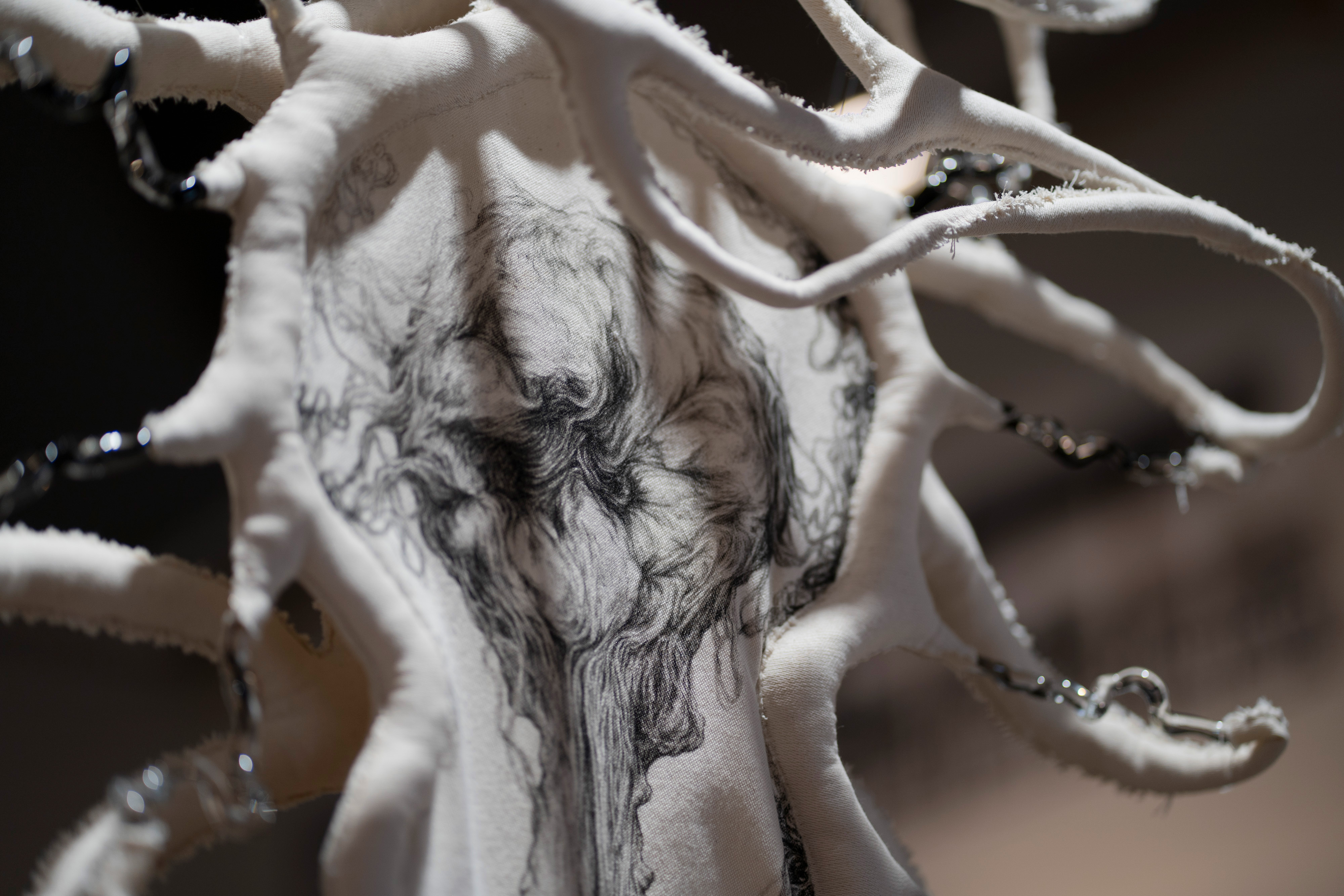
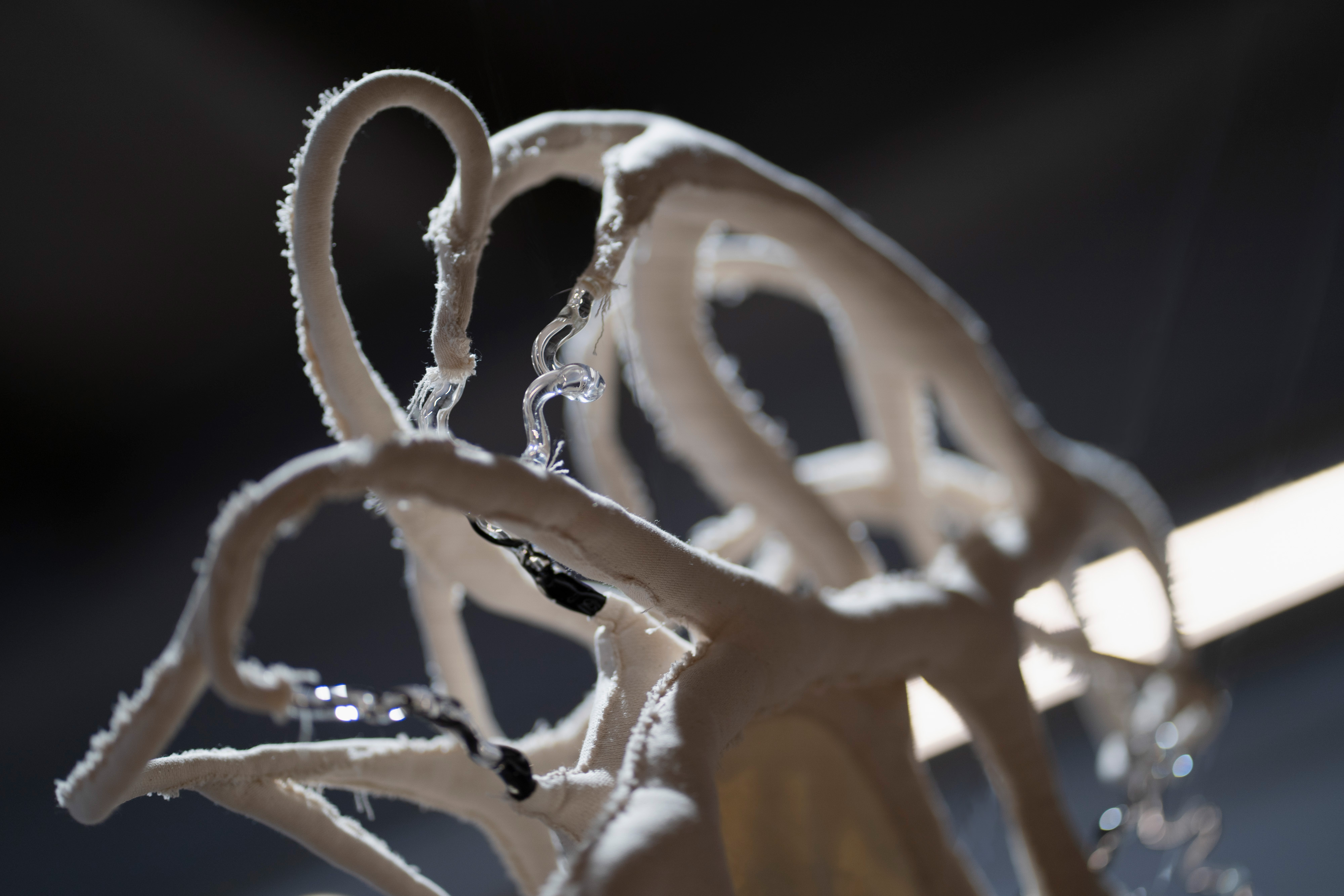
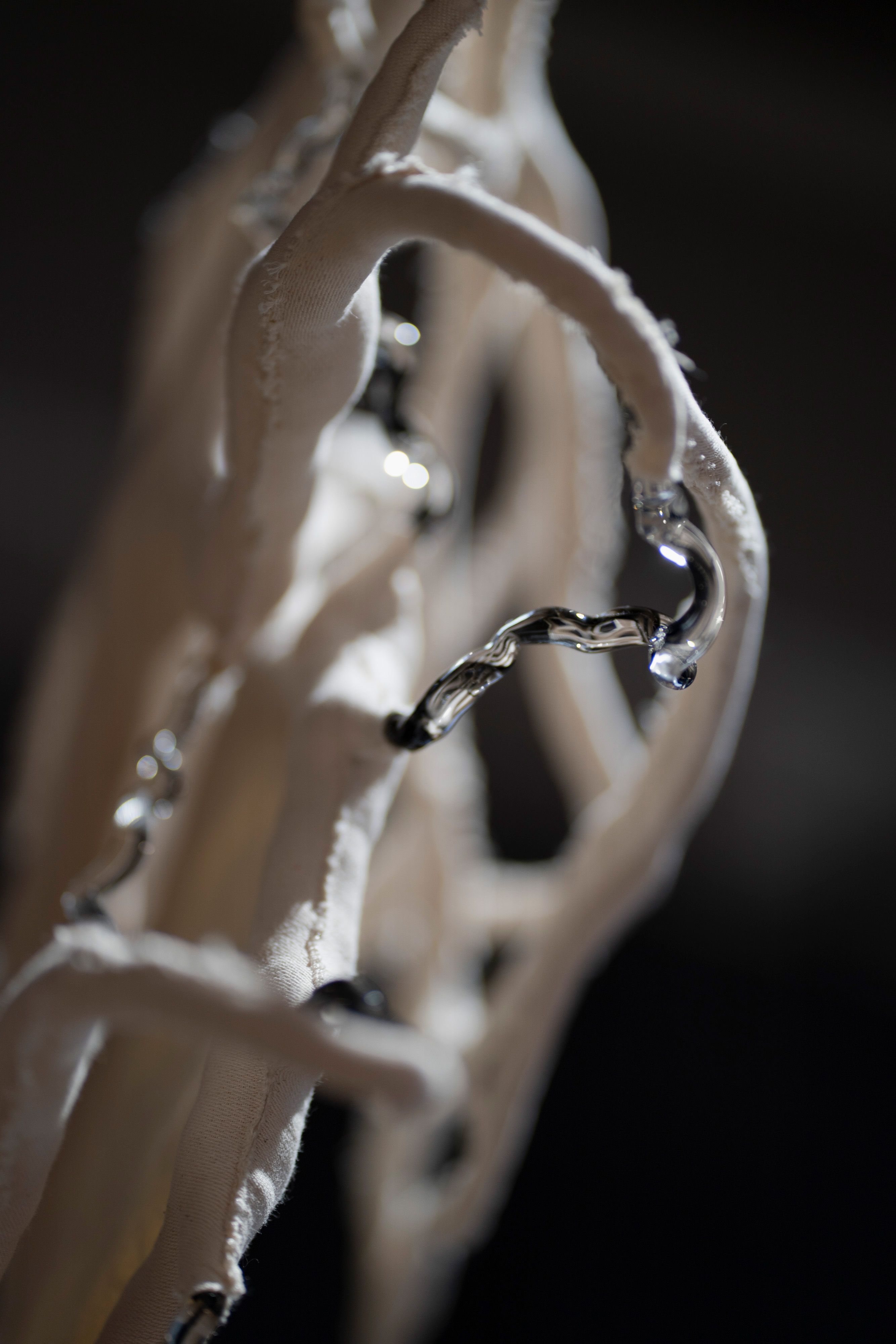
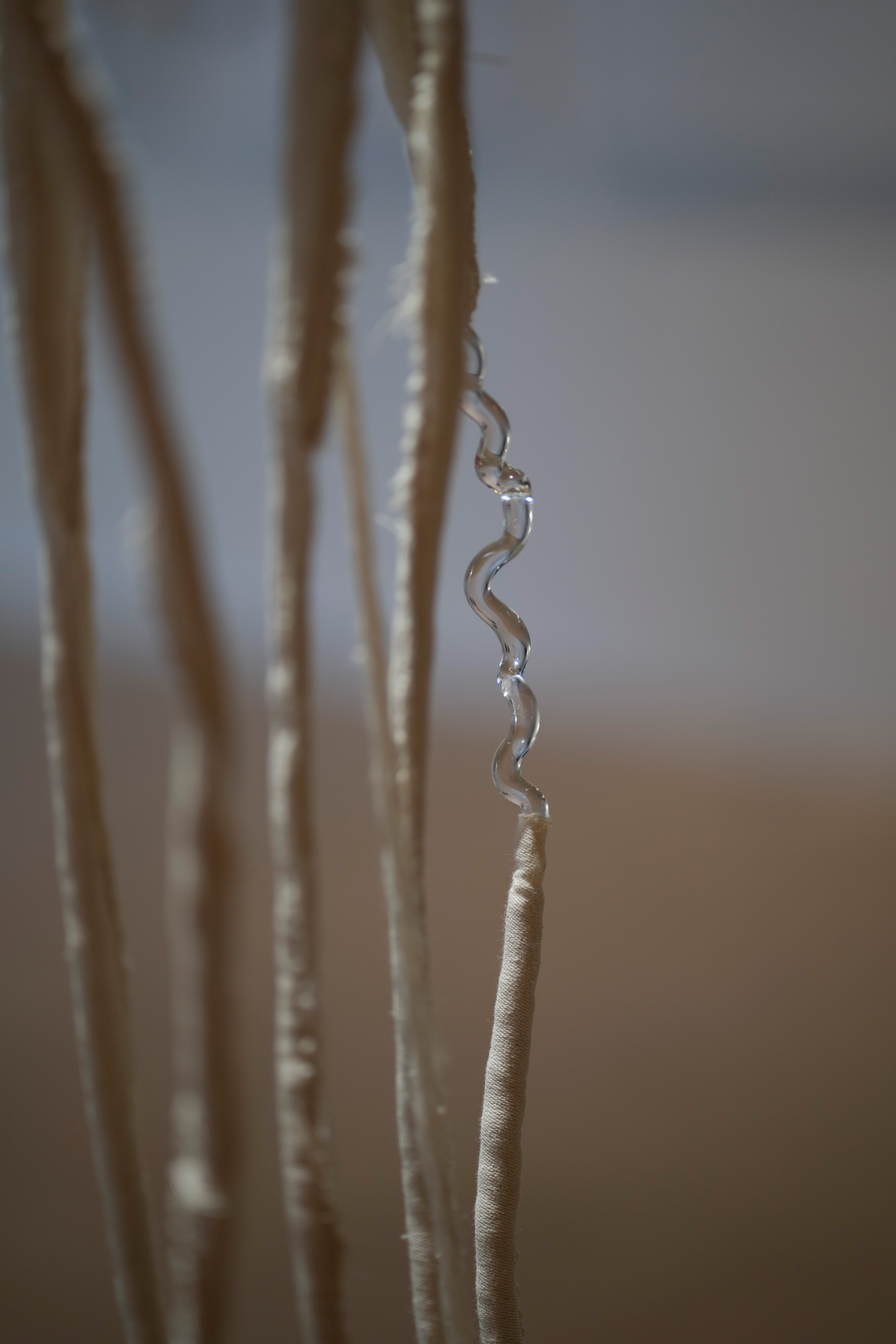
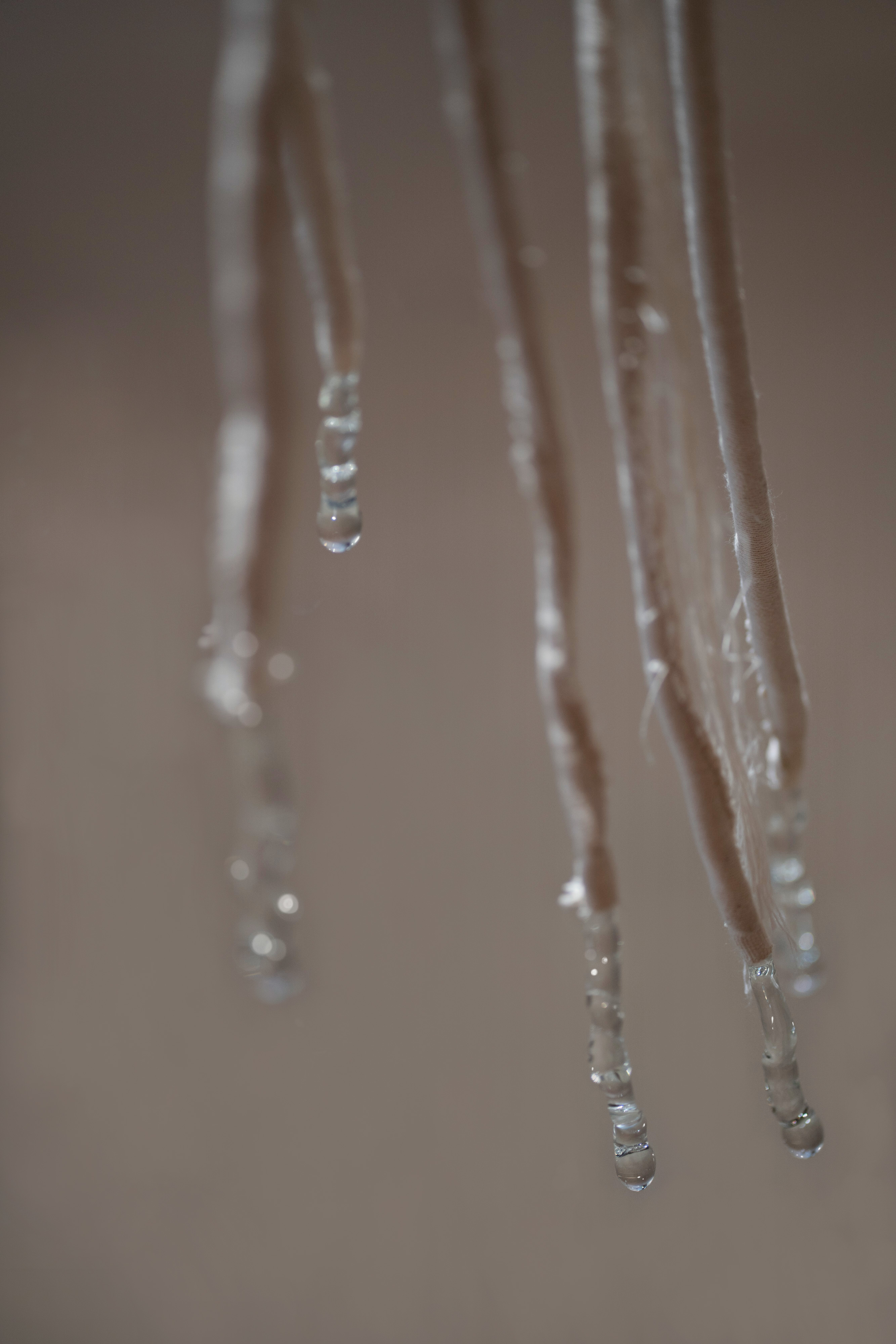
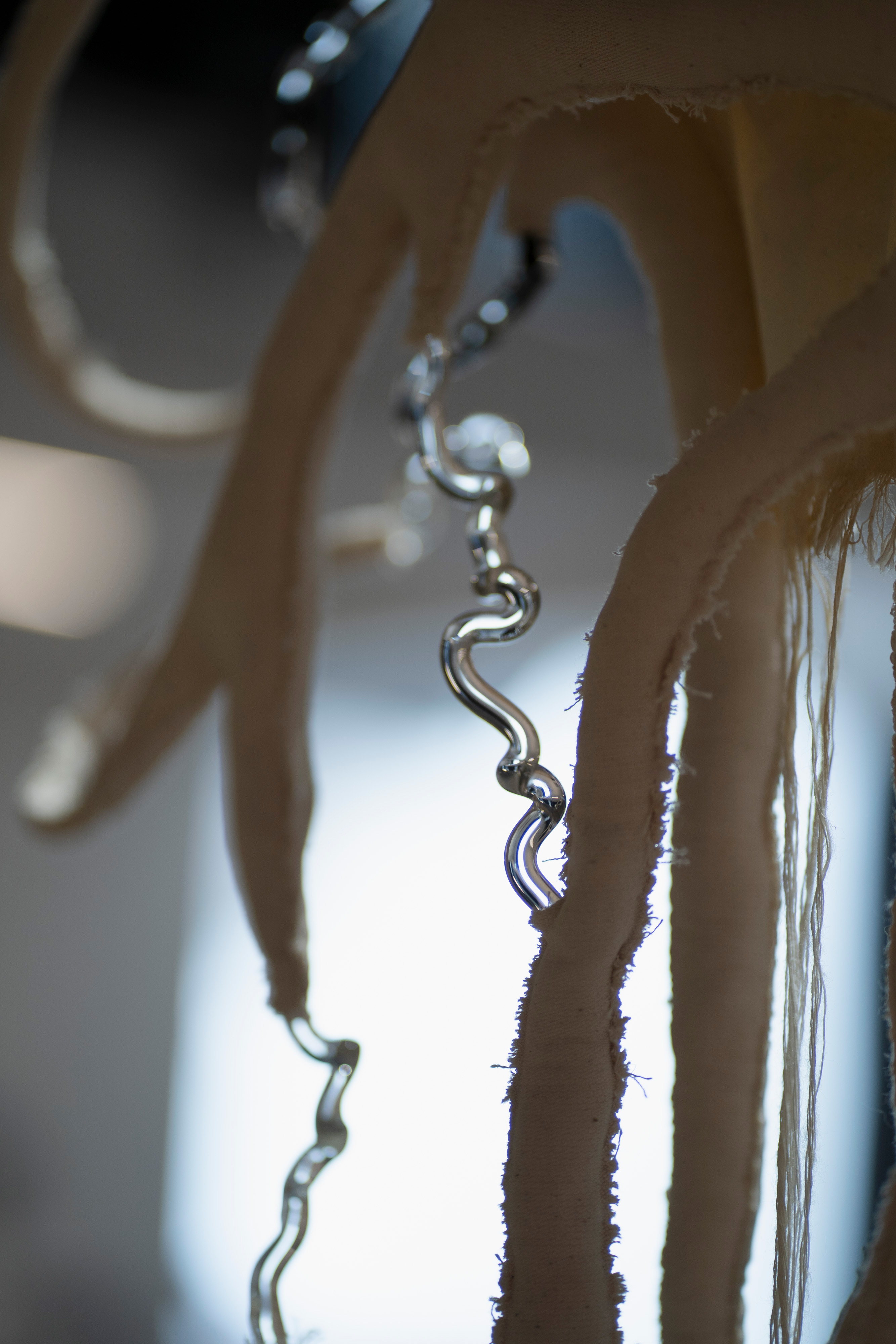
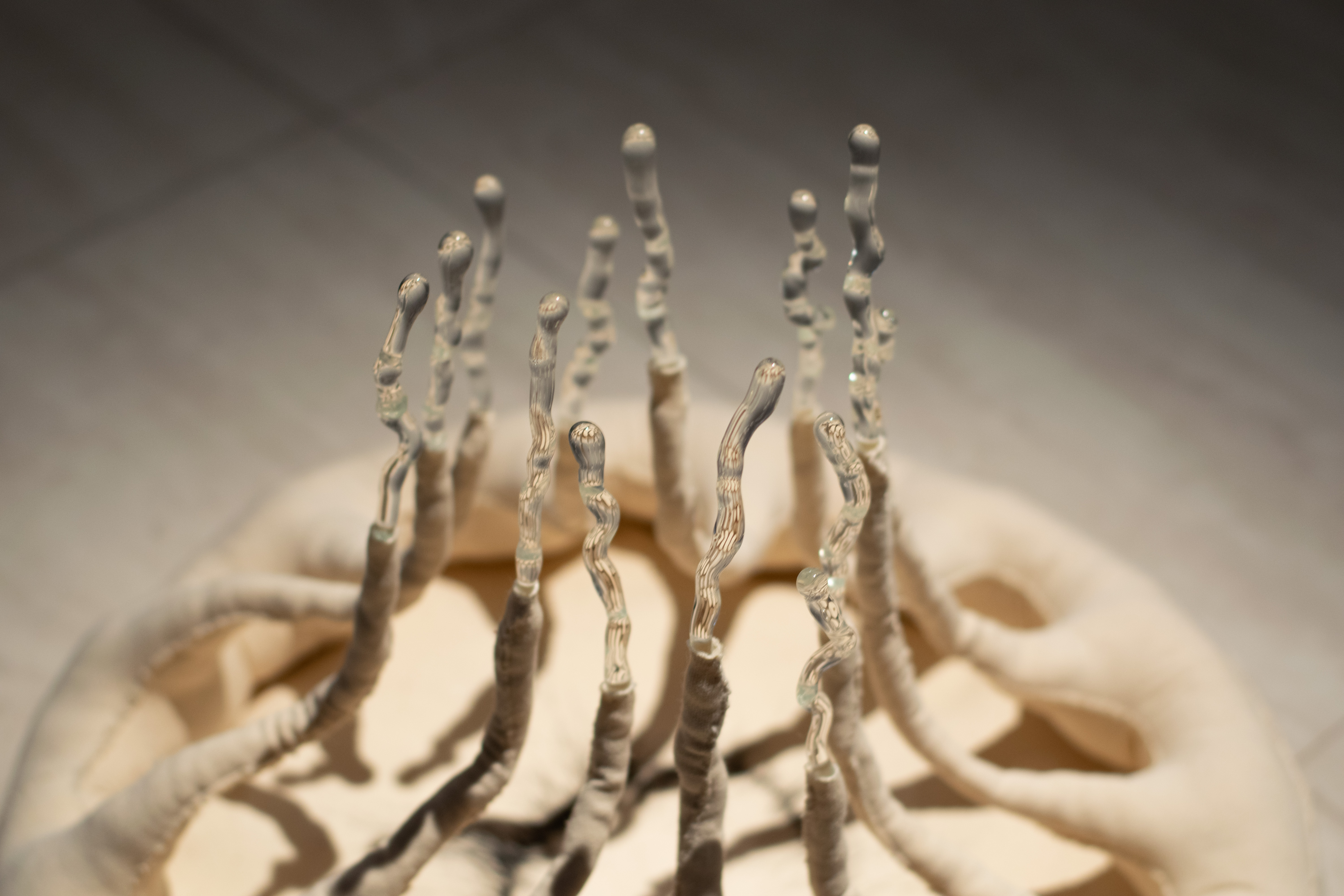
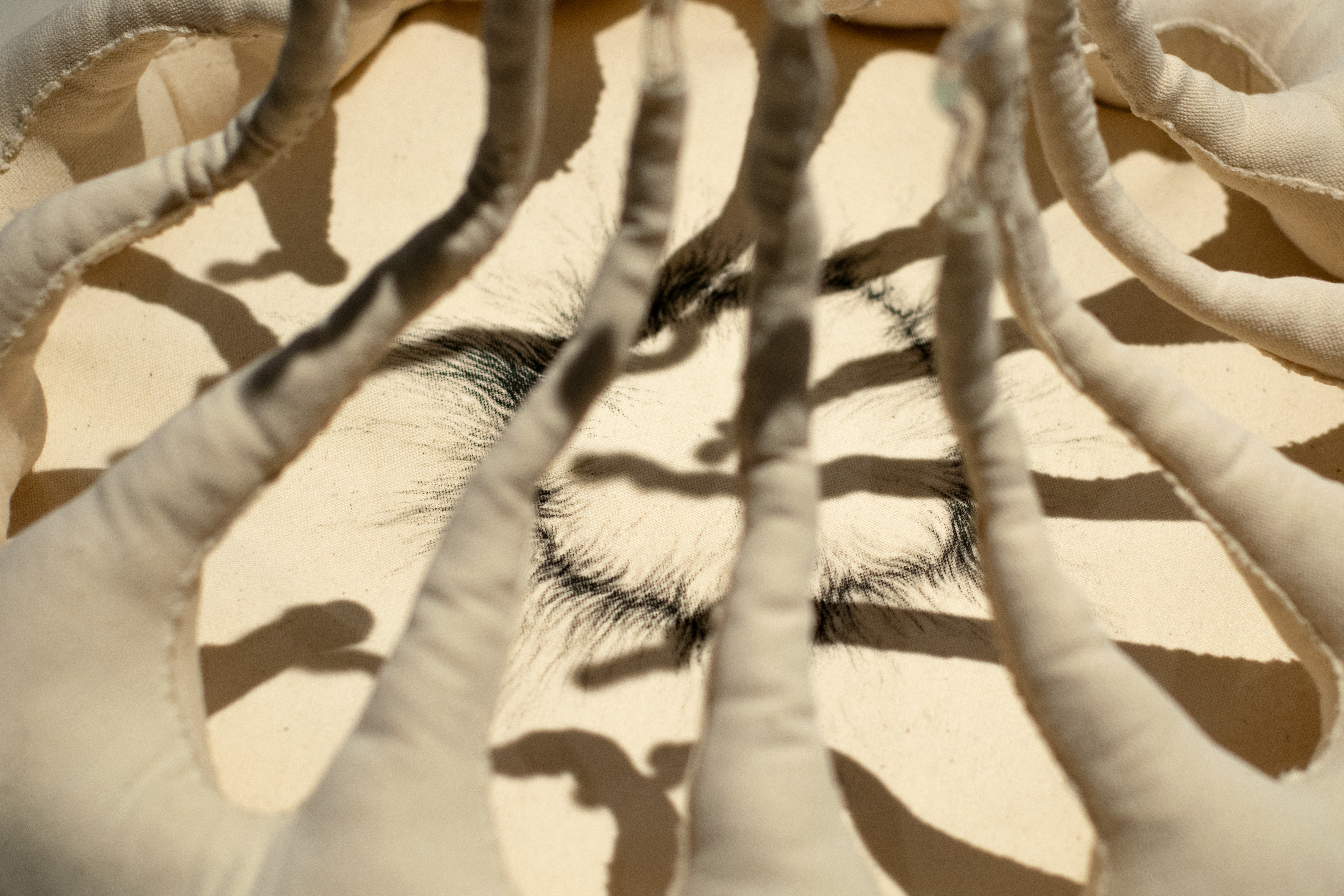
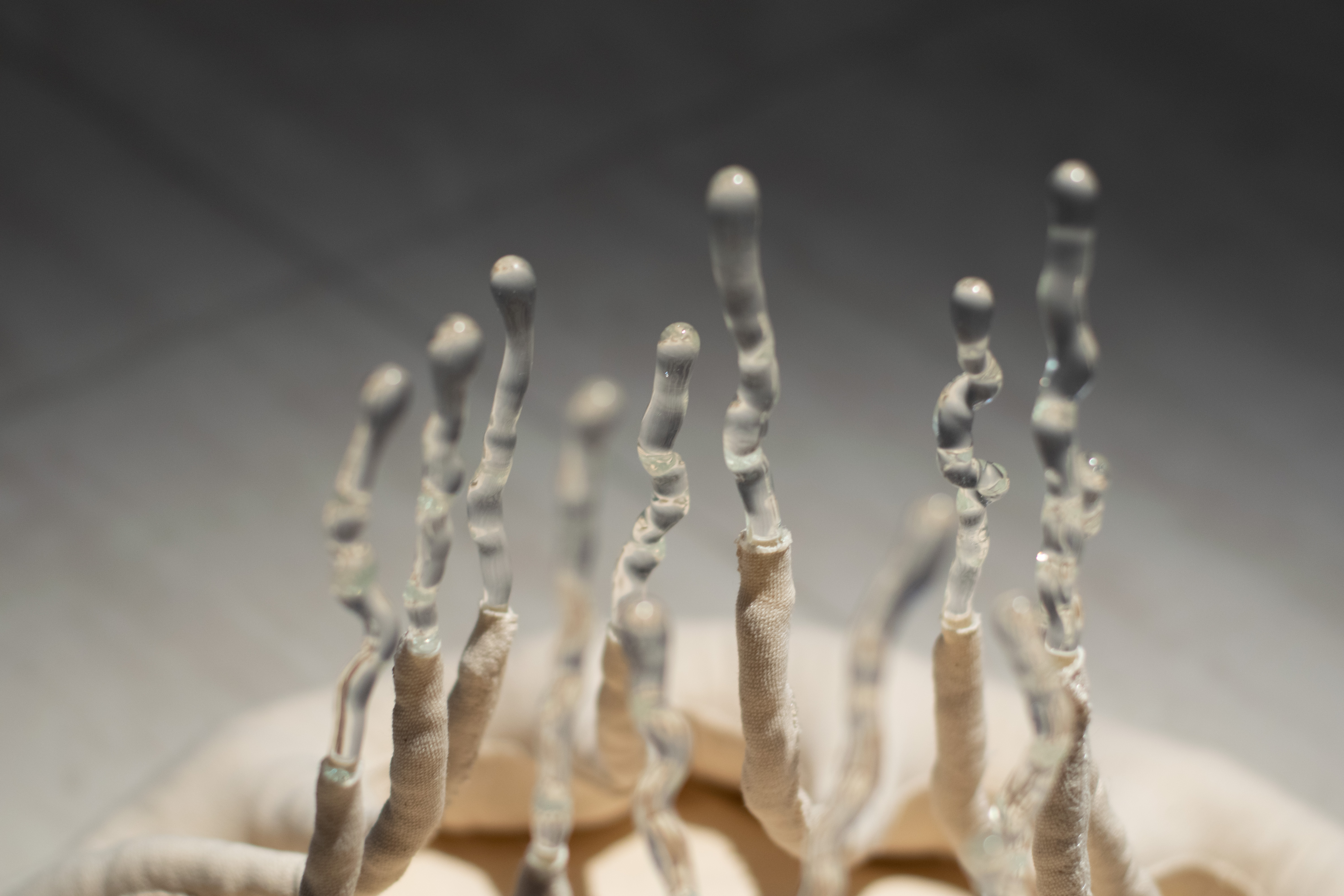
Above the stone, suspended in space, hangs my off-white linen textile and borosilicate glass sculpture. The soft sculpture evokes the complex network of the nervous system: tentacle-like forms grow continuously into root-like structures, spreading organically above the heaviness of the head. The fibers abstractly reference the strands of the central nervous system that permeate the head. This untraceable system represents thoughts as complex patterns and emotions as the combined result of neurological, hormonal, and autonomic processes. At the ends of the textile layer, borosilicate glass elements emerge, flowing like internal fluids and connecting the forms as an essential substance necessary for the system’s operation. Sewn together with cotton canvas, these glass drops extend back toward the head, creating delicate and fragile points of connection. Fragile Sanity makes visible the tension between solidity and fluidity, geological time and psychological processes, shaping an inner landscape where mental stability and fragility exist in a continuous search for balance.
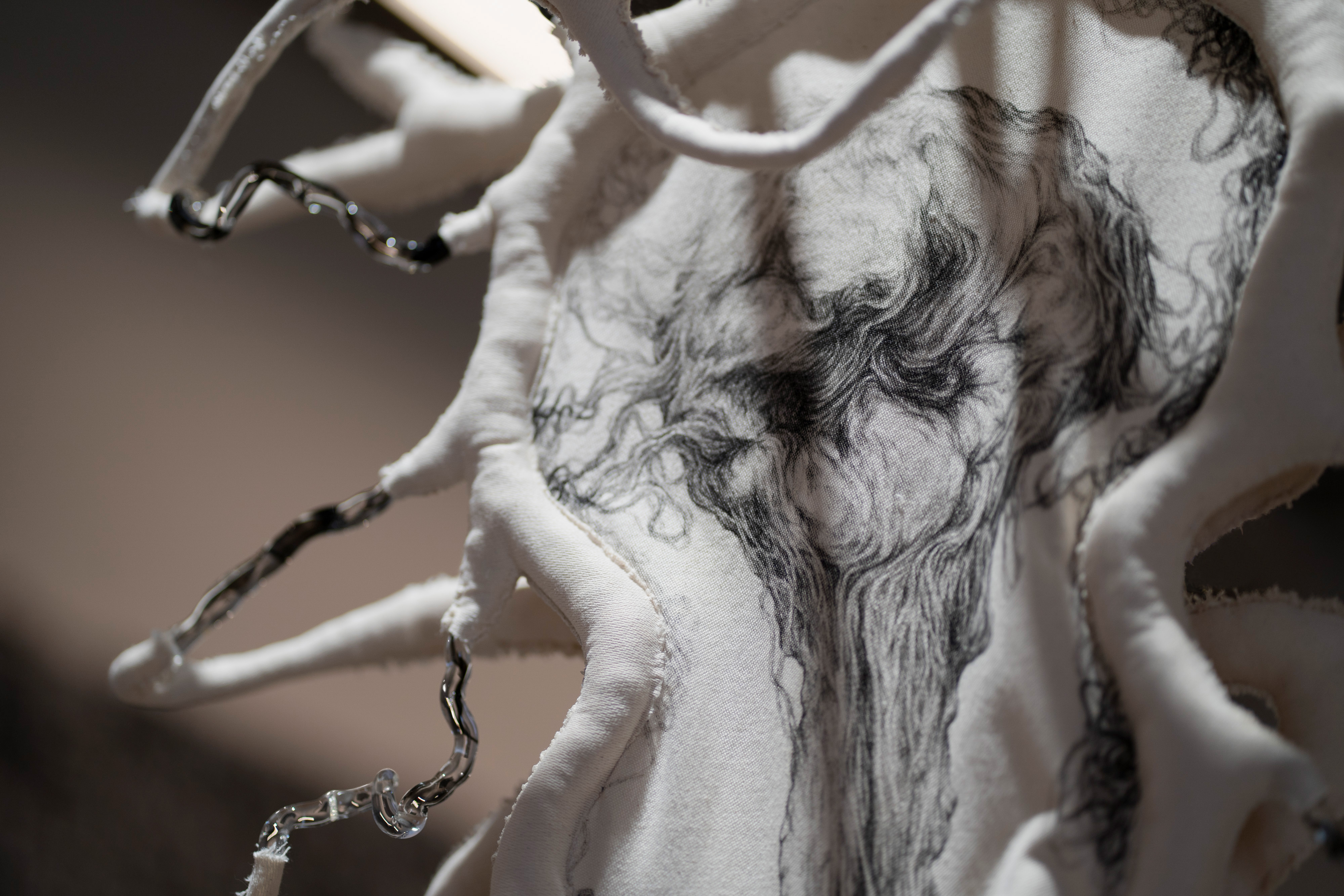
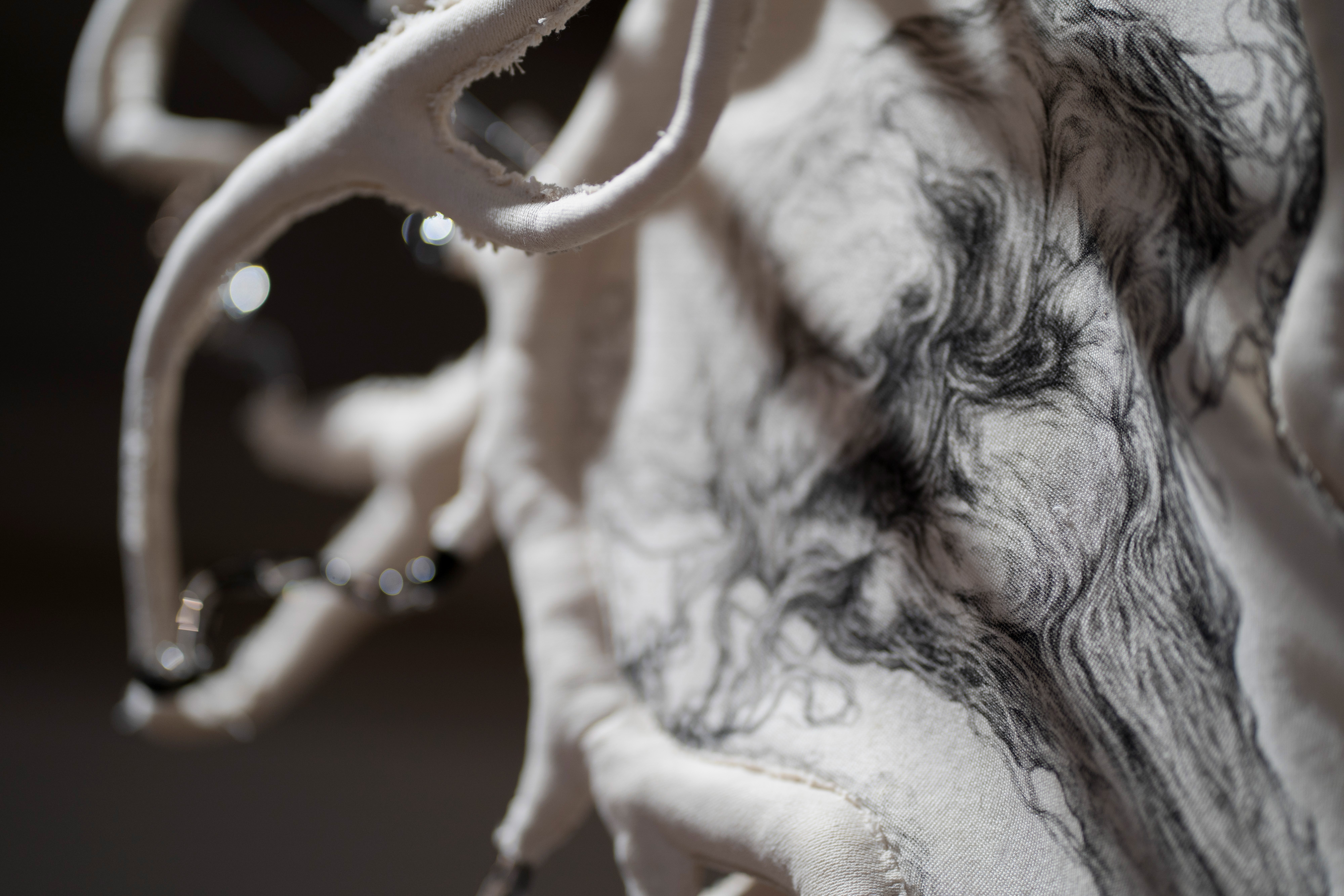
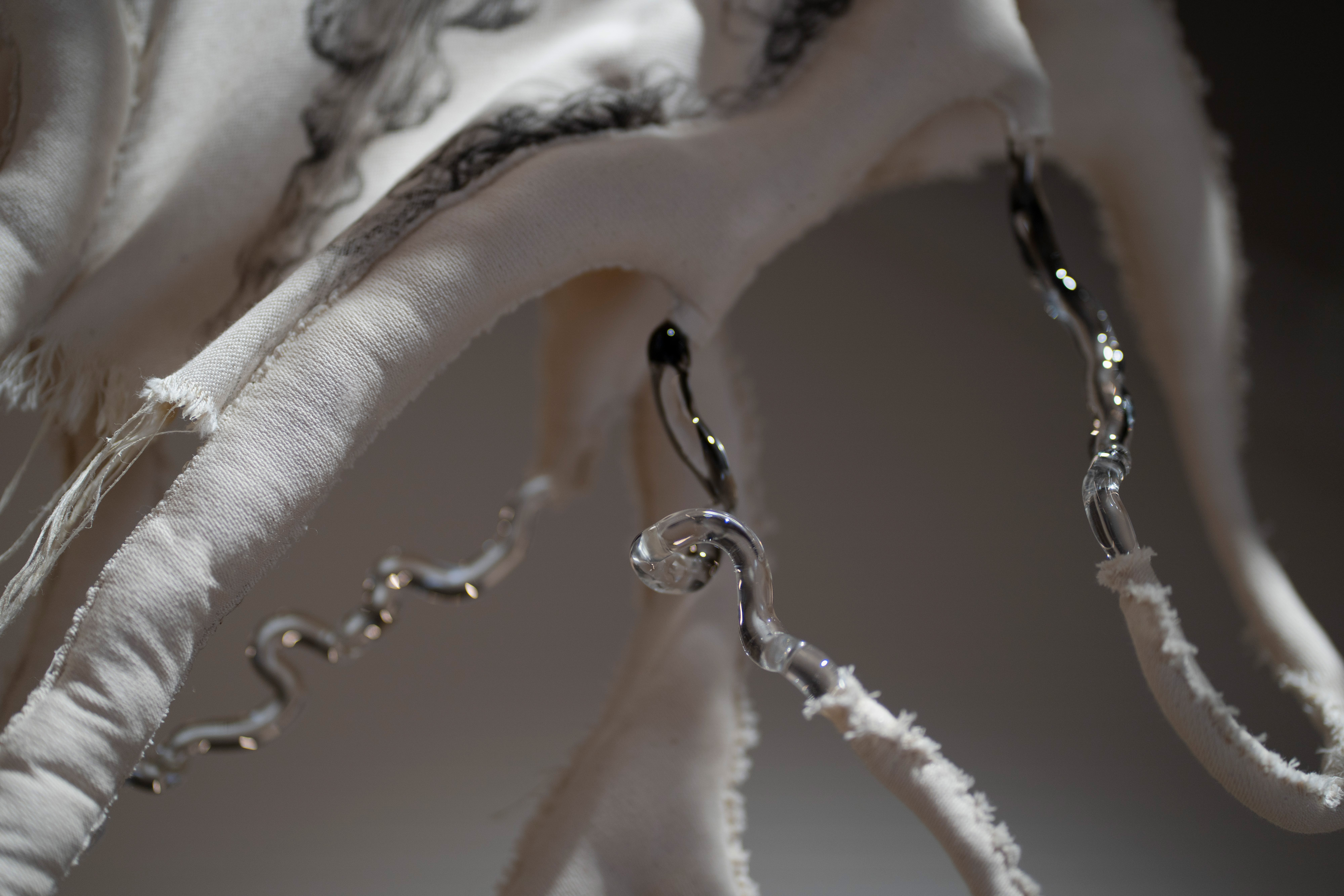
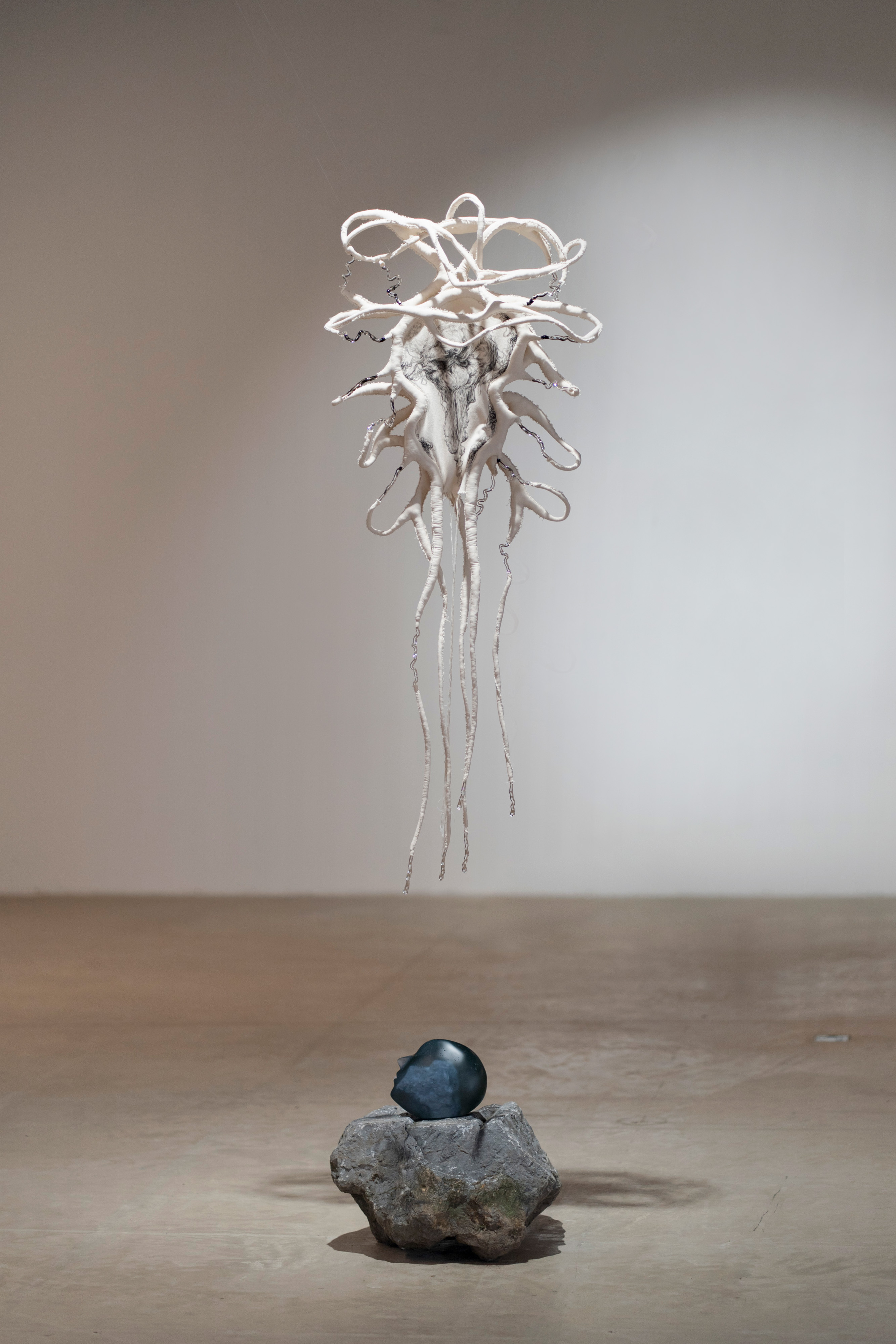
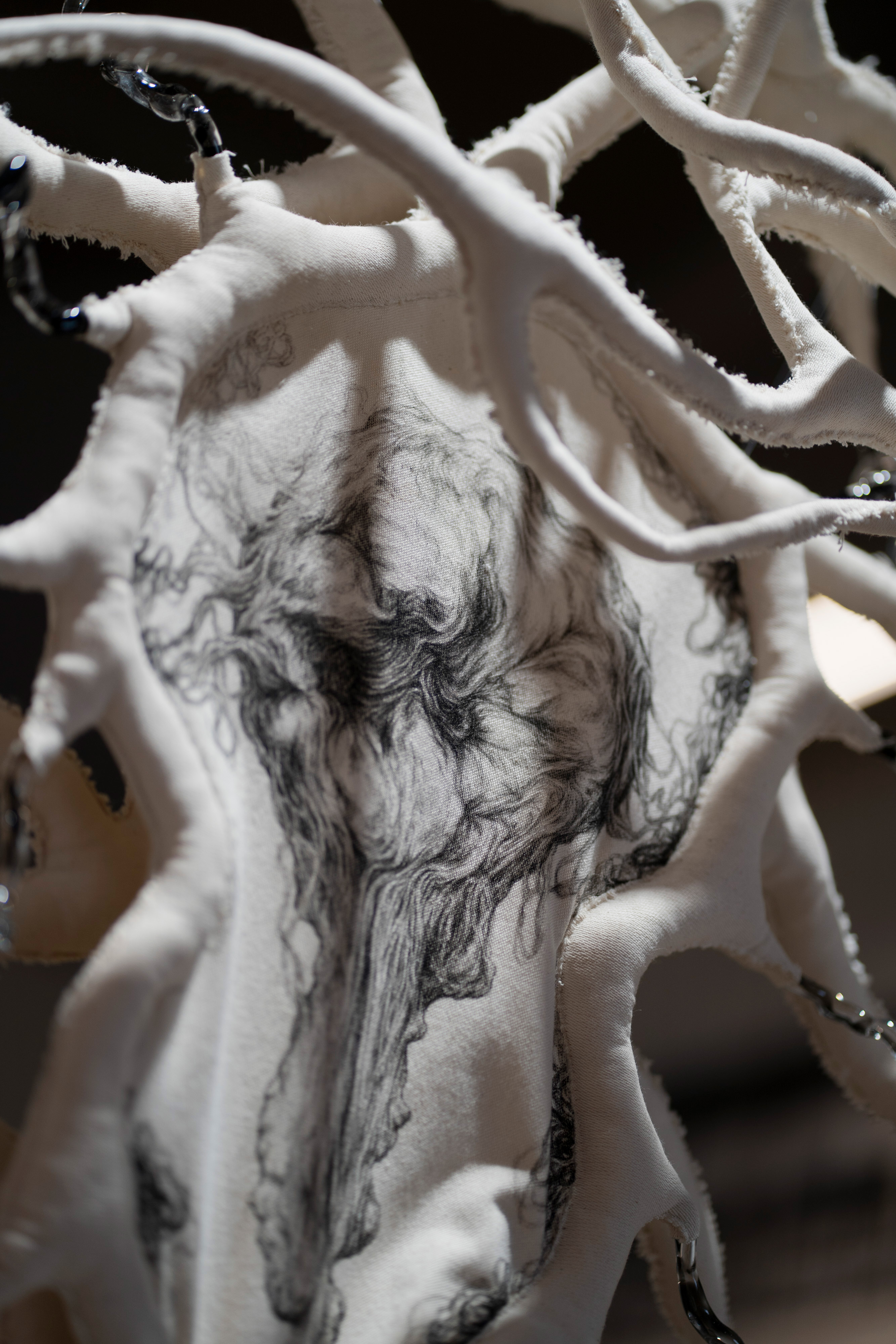
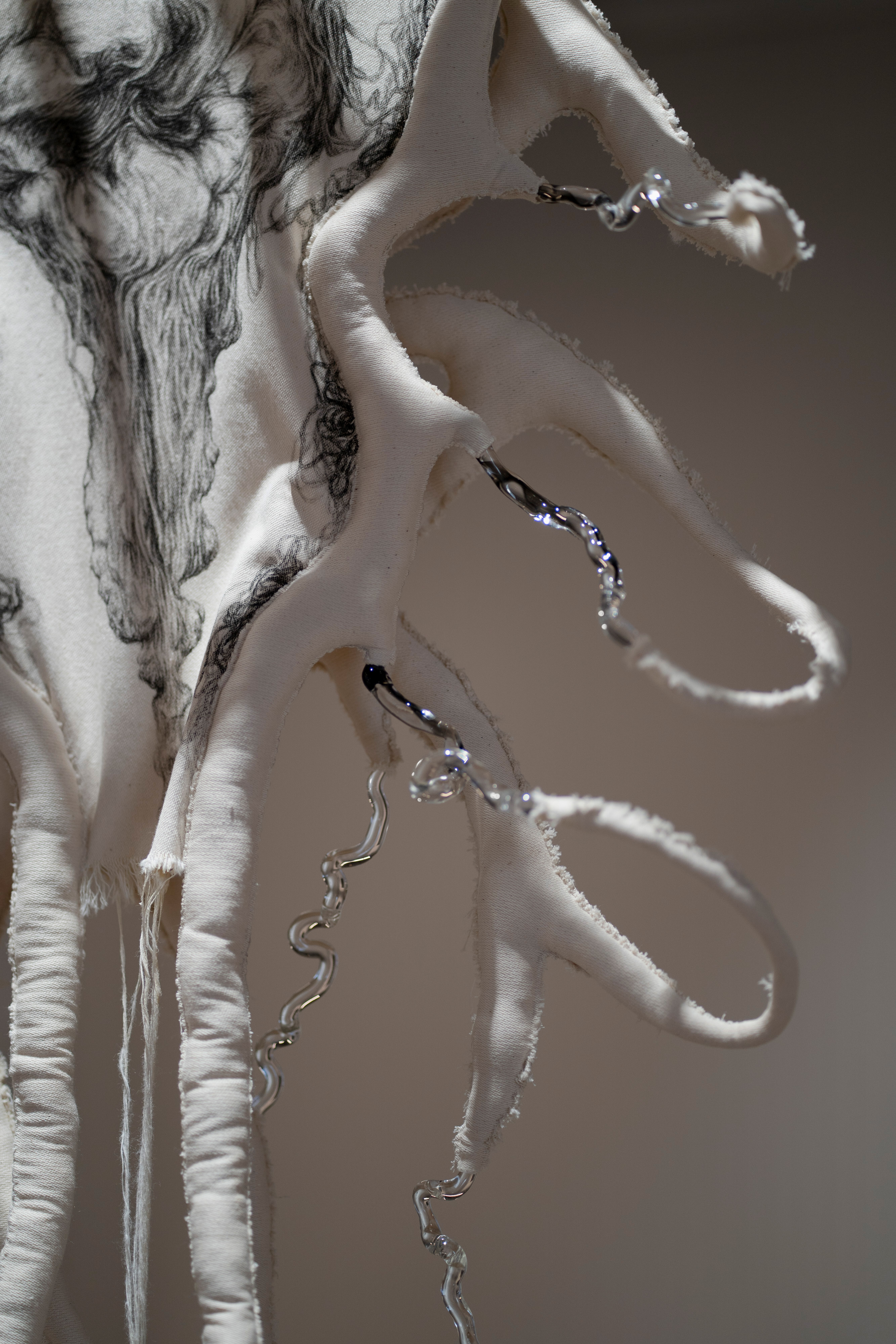
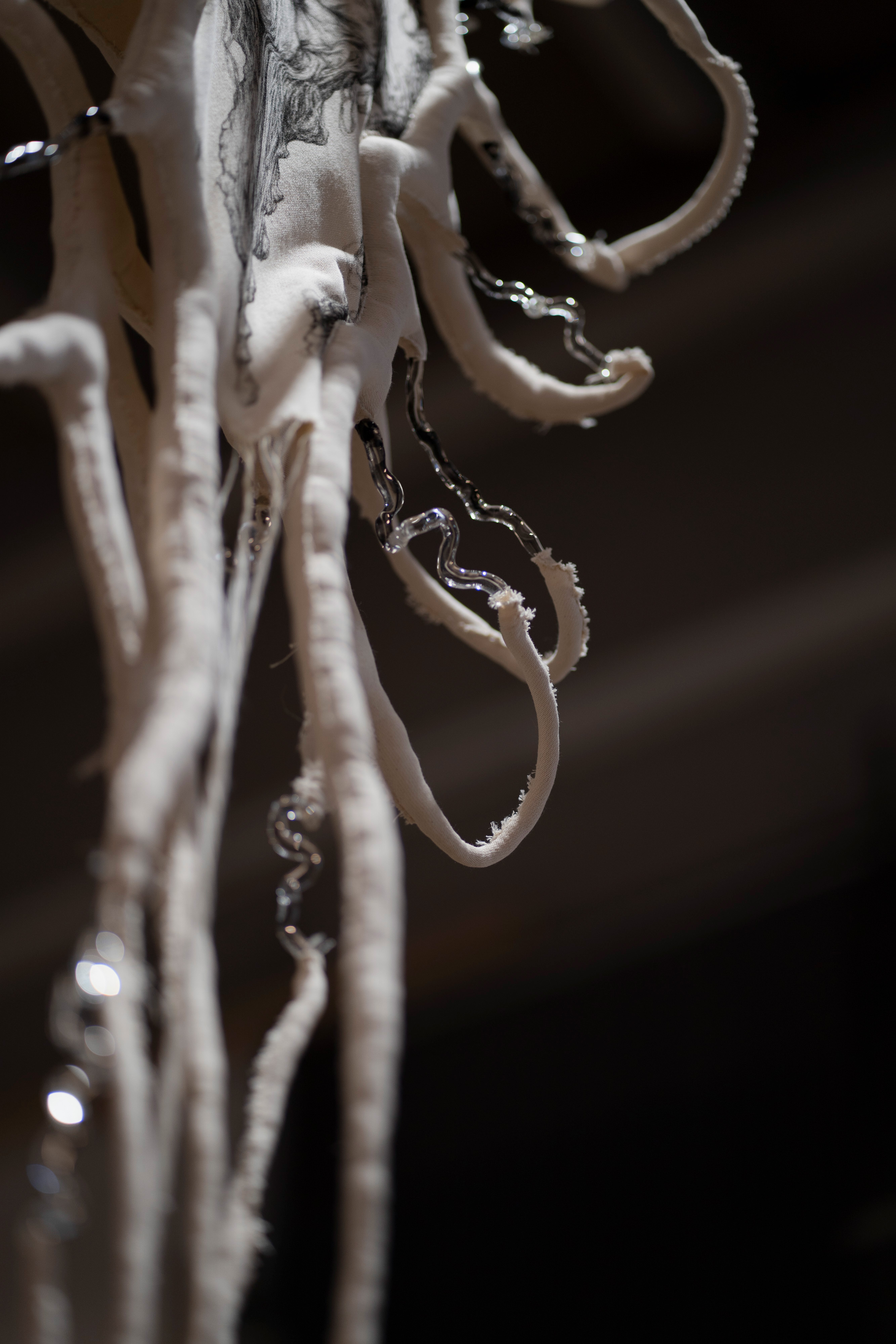
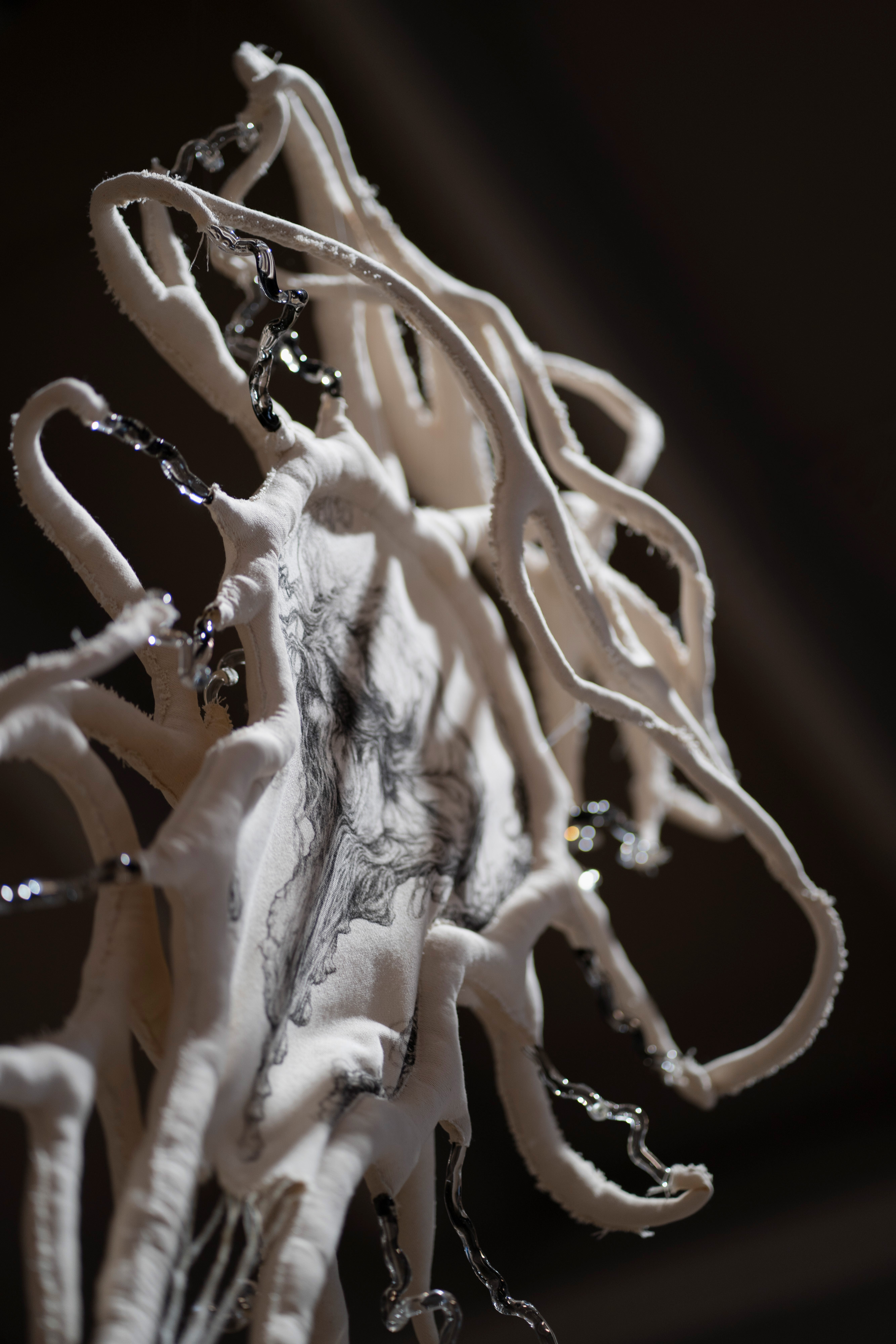
Fragile sanity (textile and borosilicate glass sculpture)
borosilicate glass, cotton canvas, cotton thread, ink, stainless steel wire, cotton whool
80x130x45 cm
2025
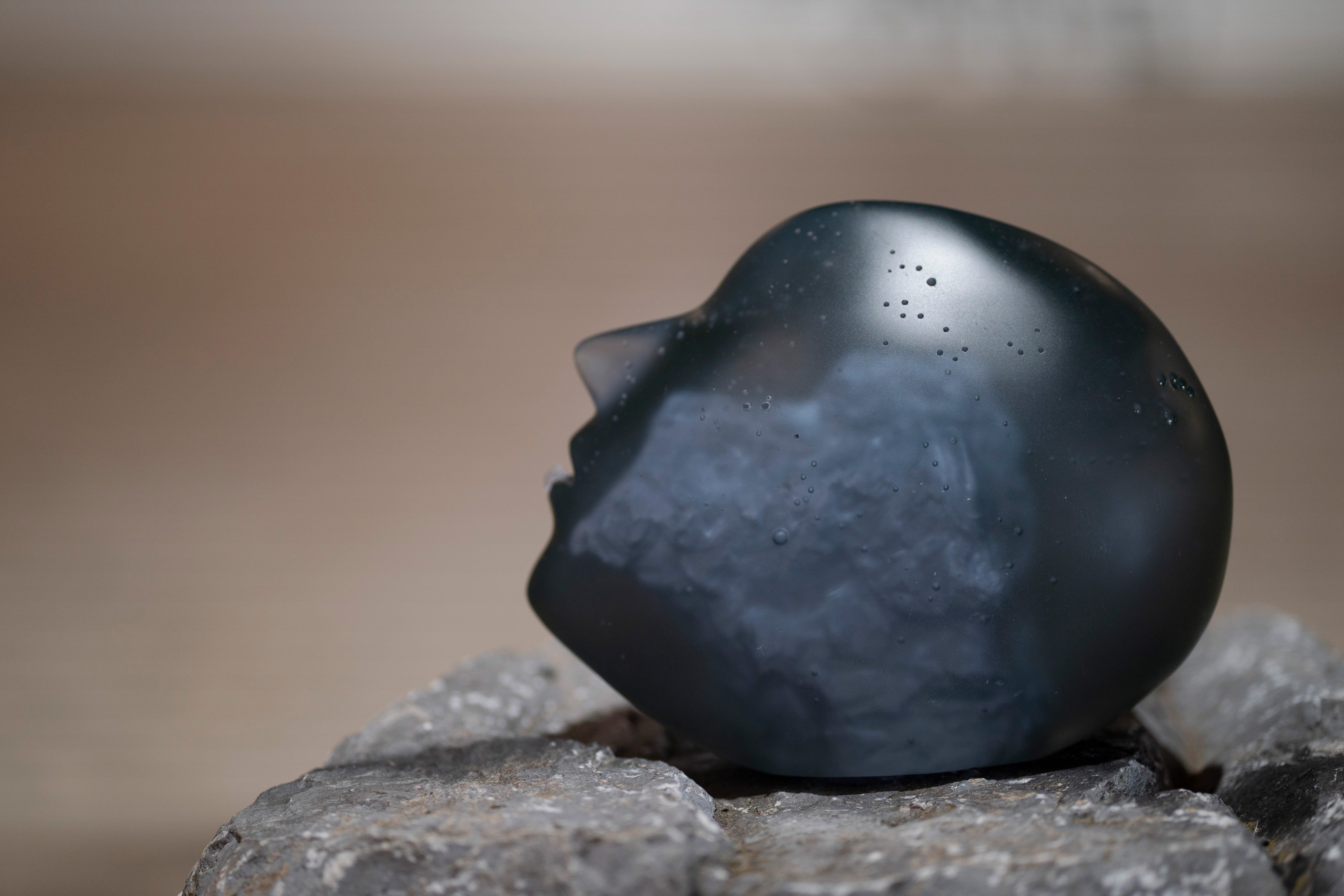
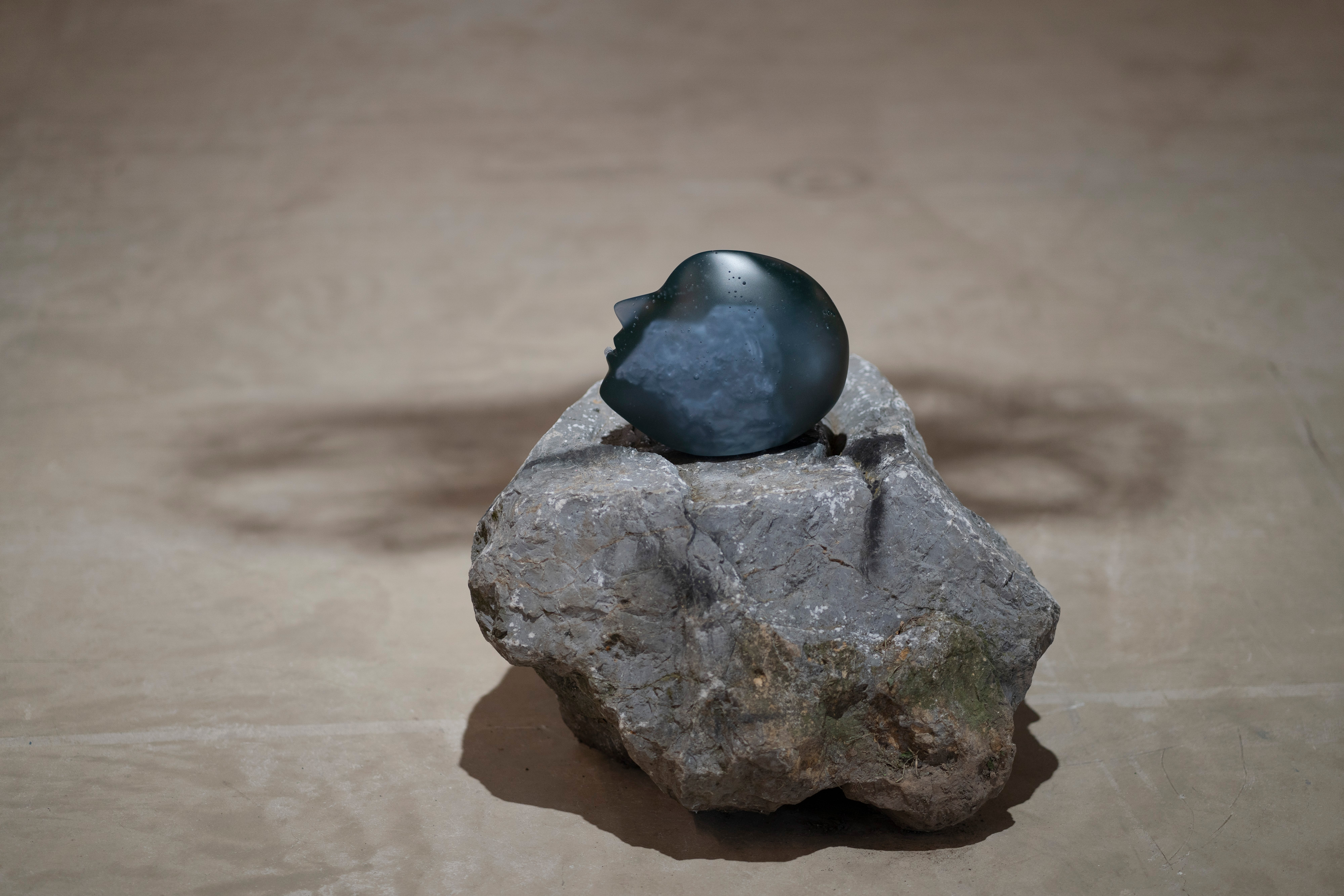
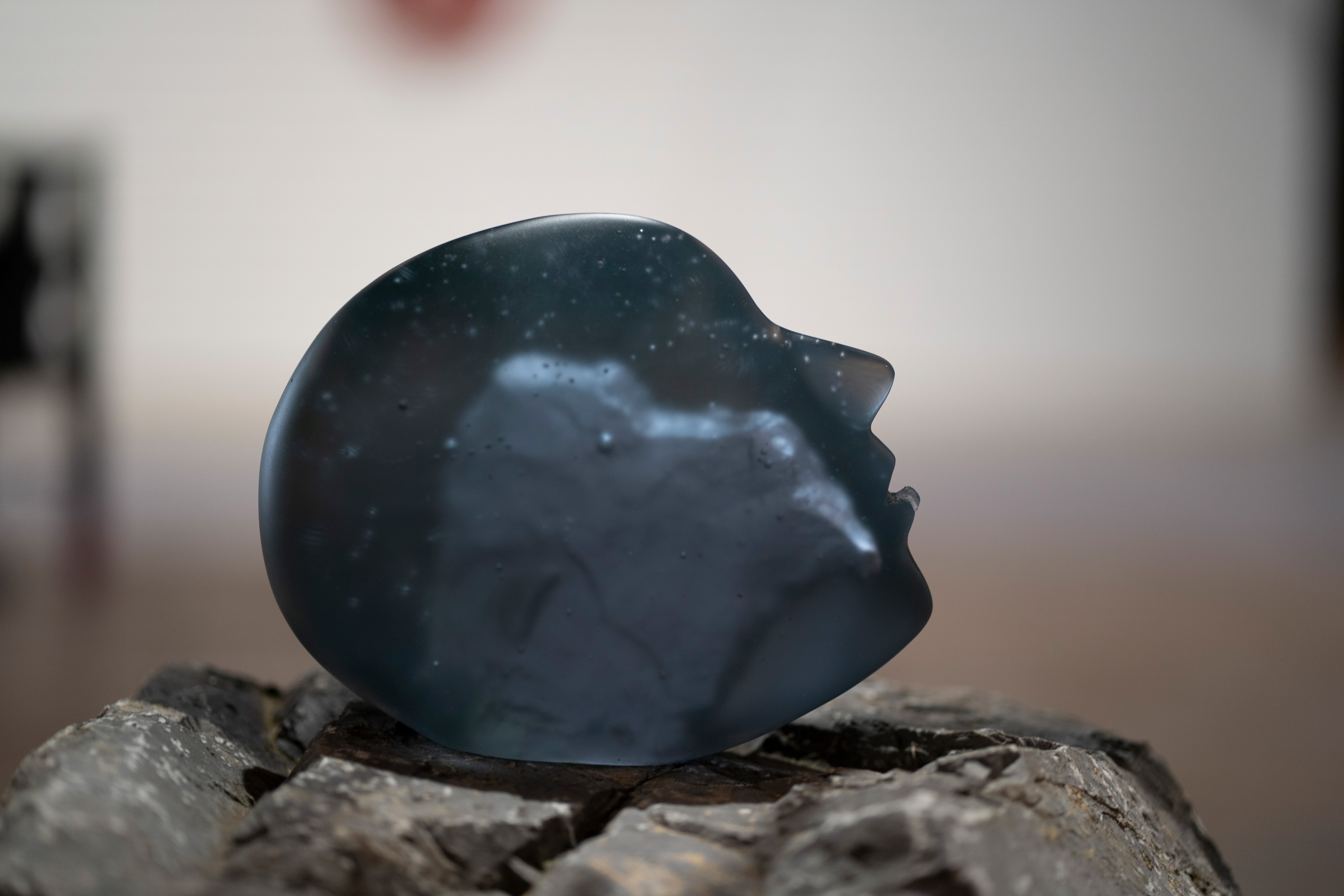
Neurosis by Stella Koleszár
cast glass
23x22x14 cm
2025
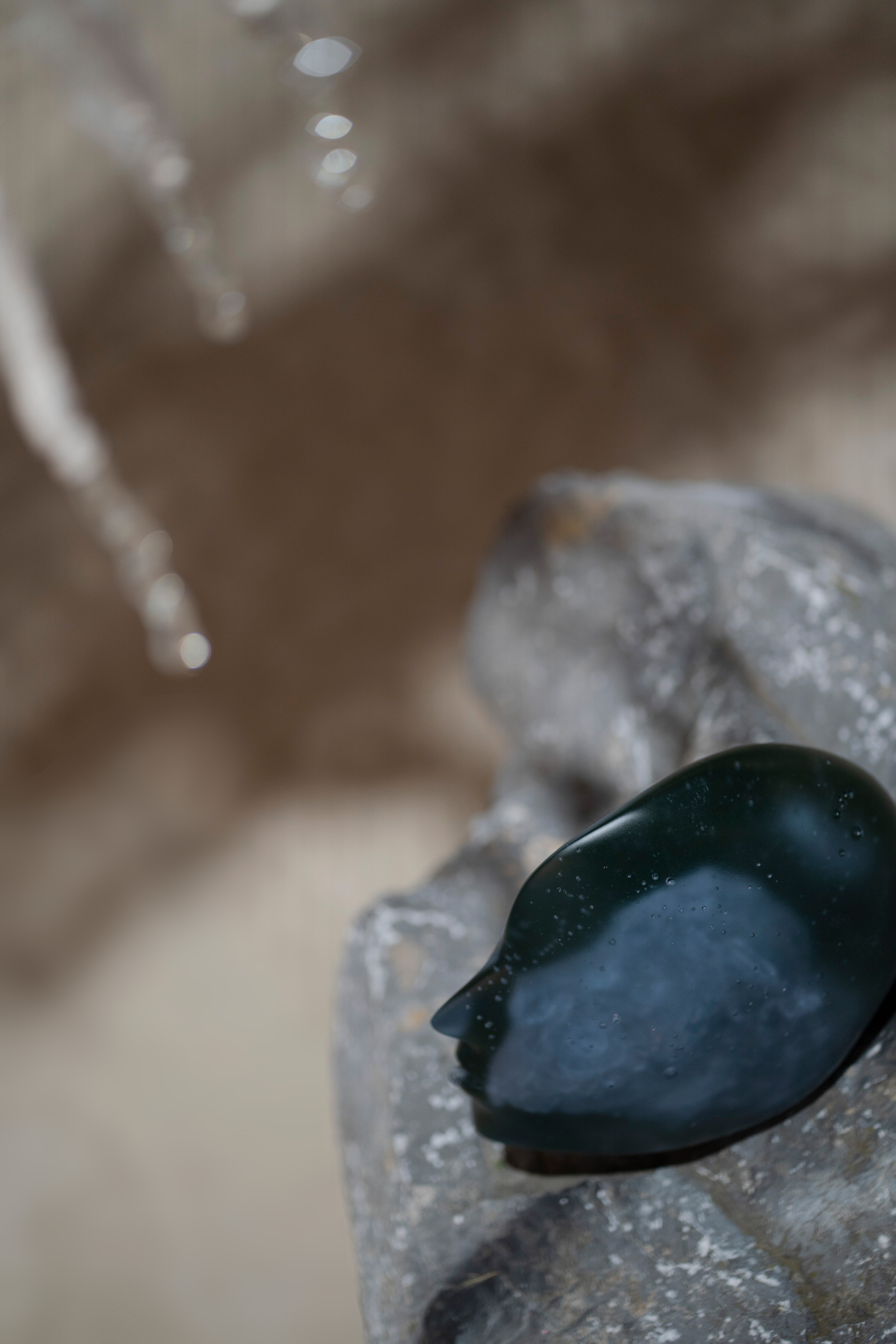
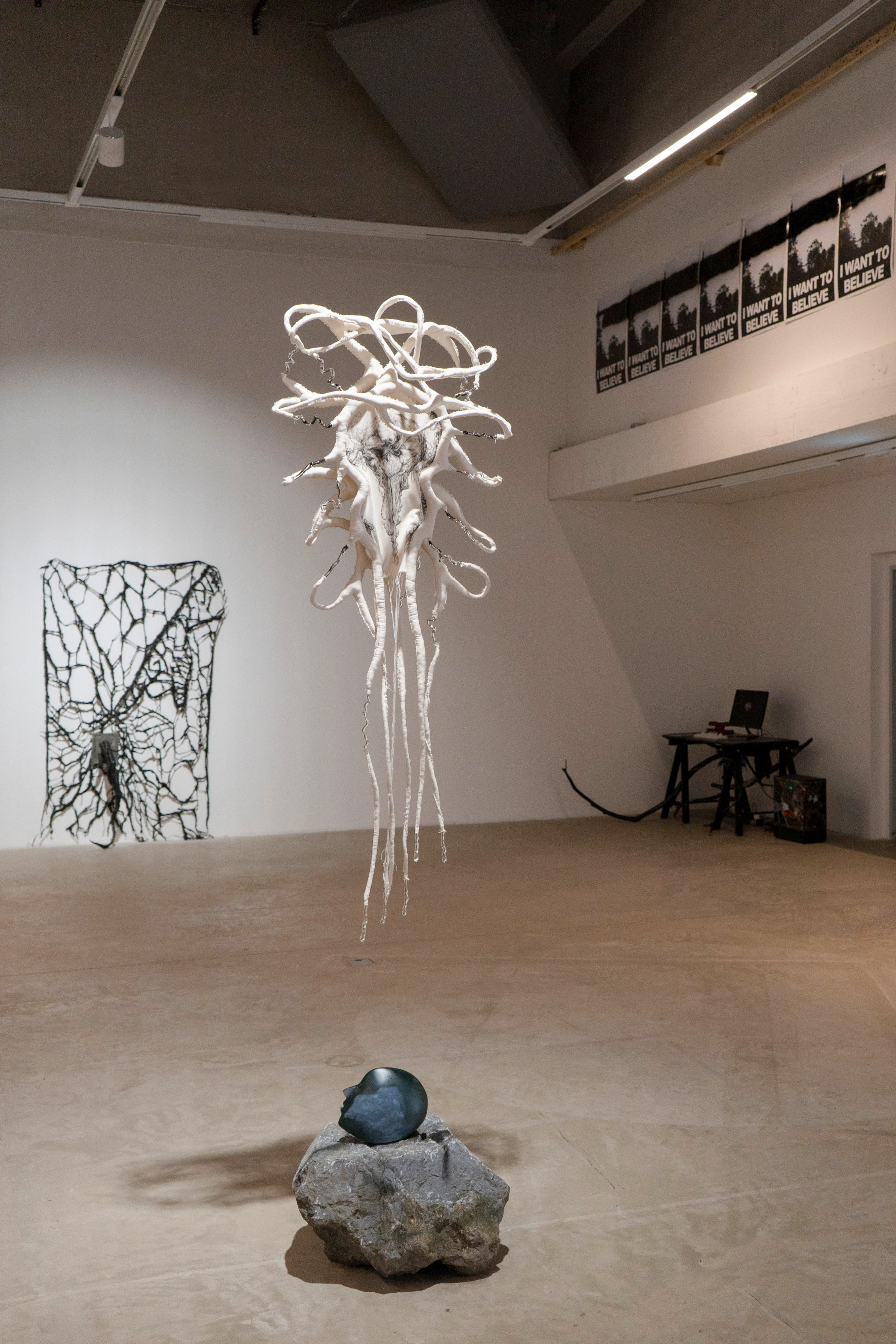
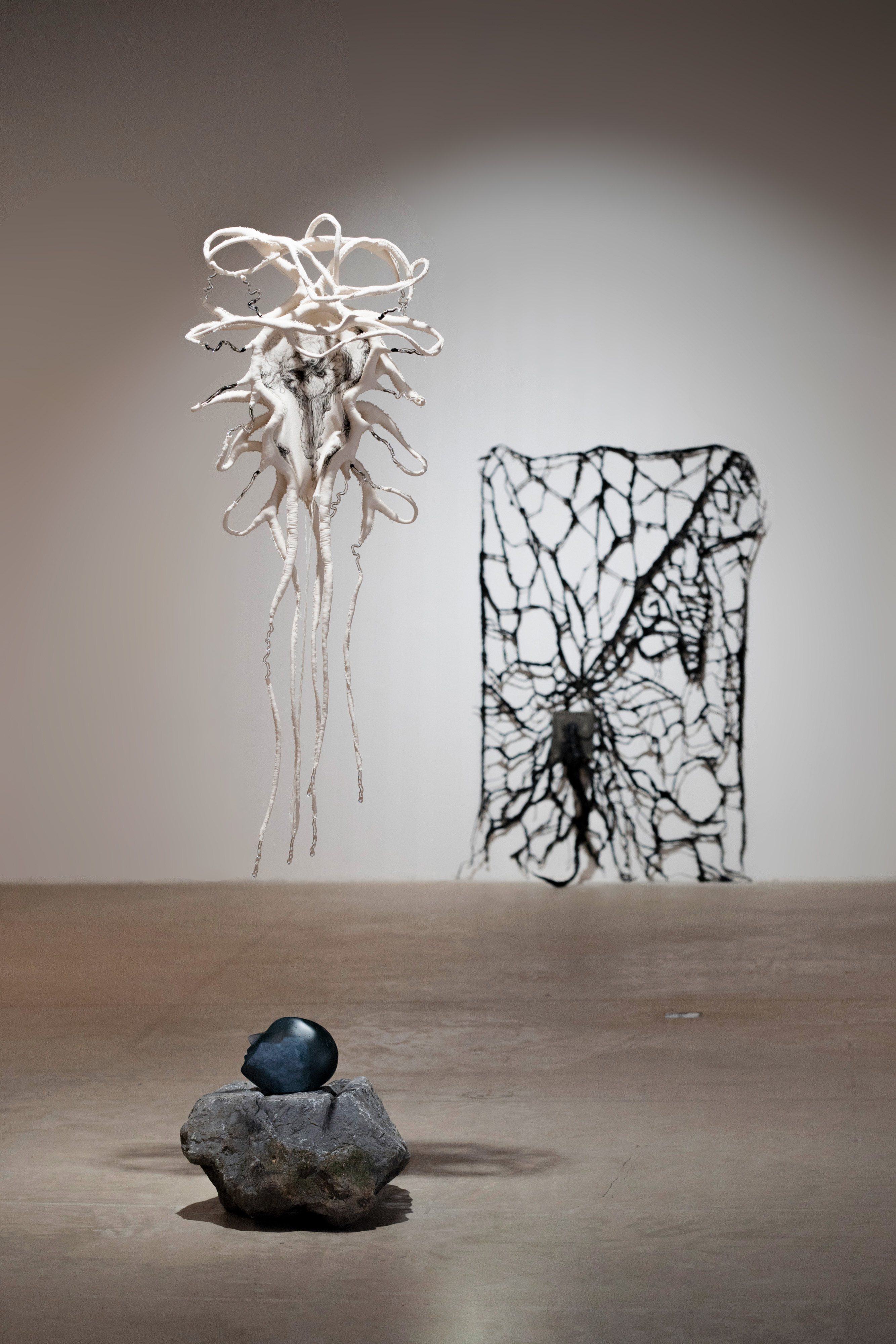
The Fragile Sanity textile sculpture is featured in a new installation at the "Access is off the beaten track" international group exhibition, at HAB - Hungarian Art and Business, Budapest, in collaboration with the Steinhauser Gallery.
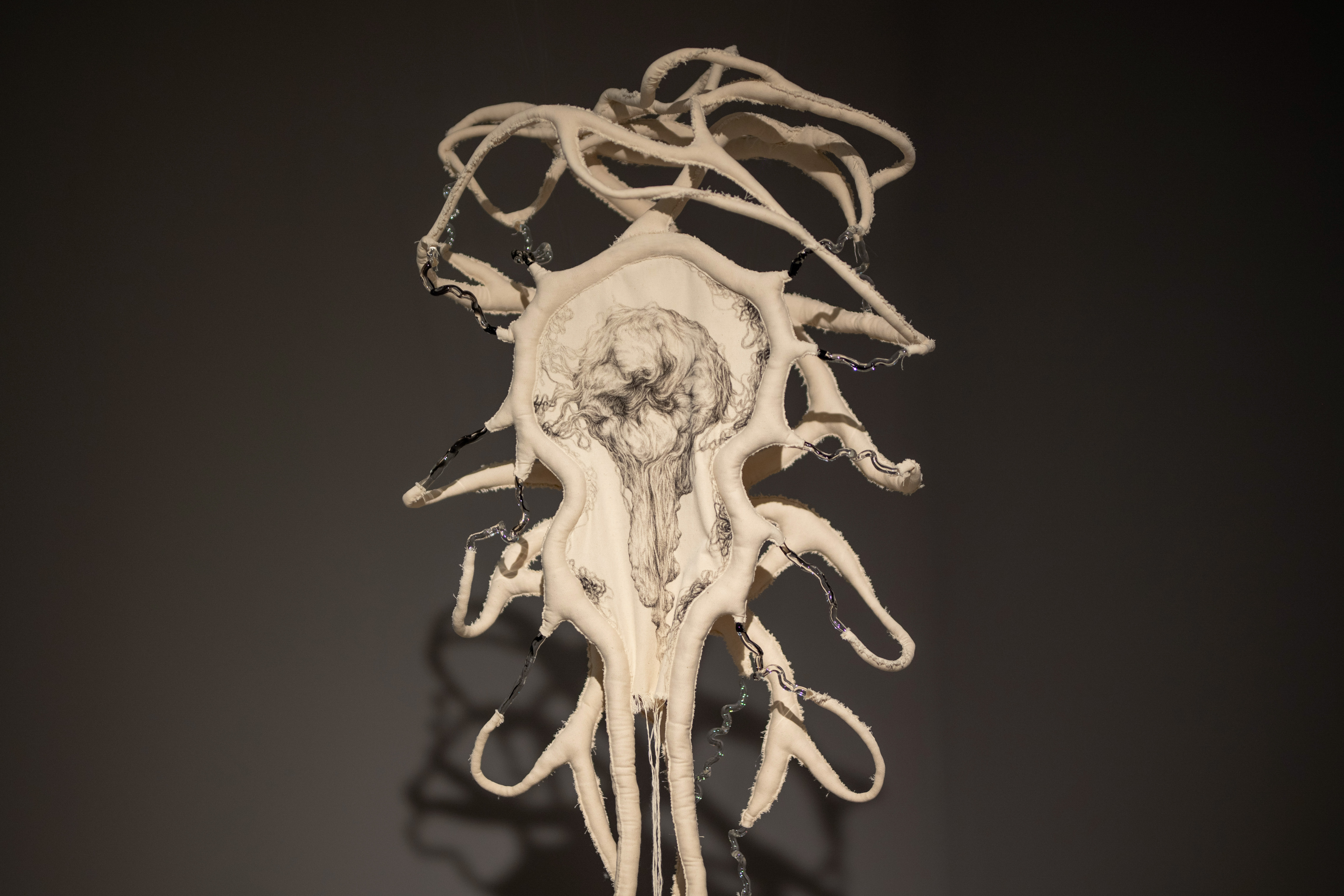
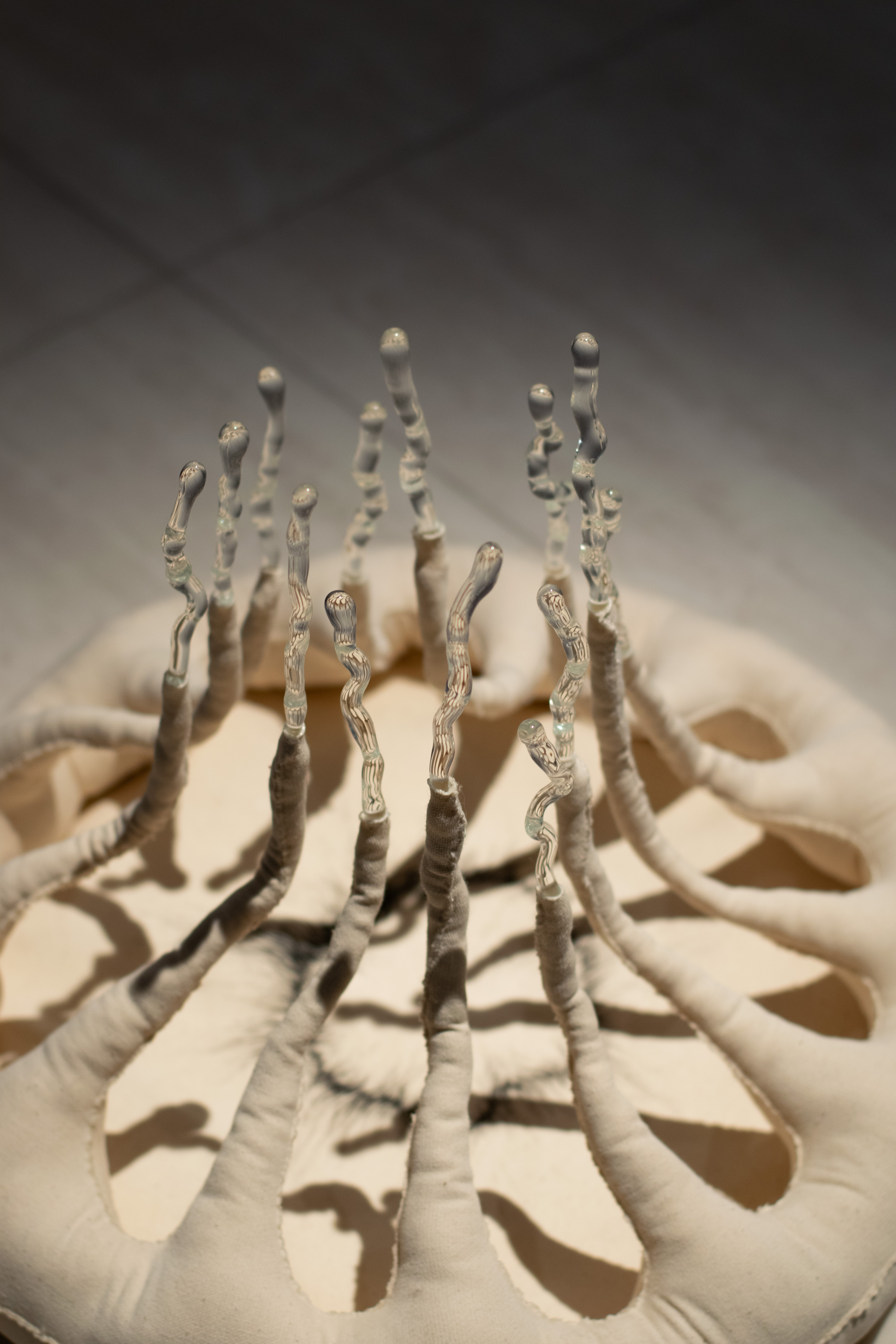
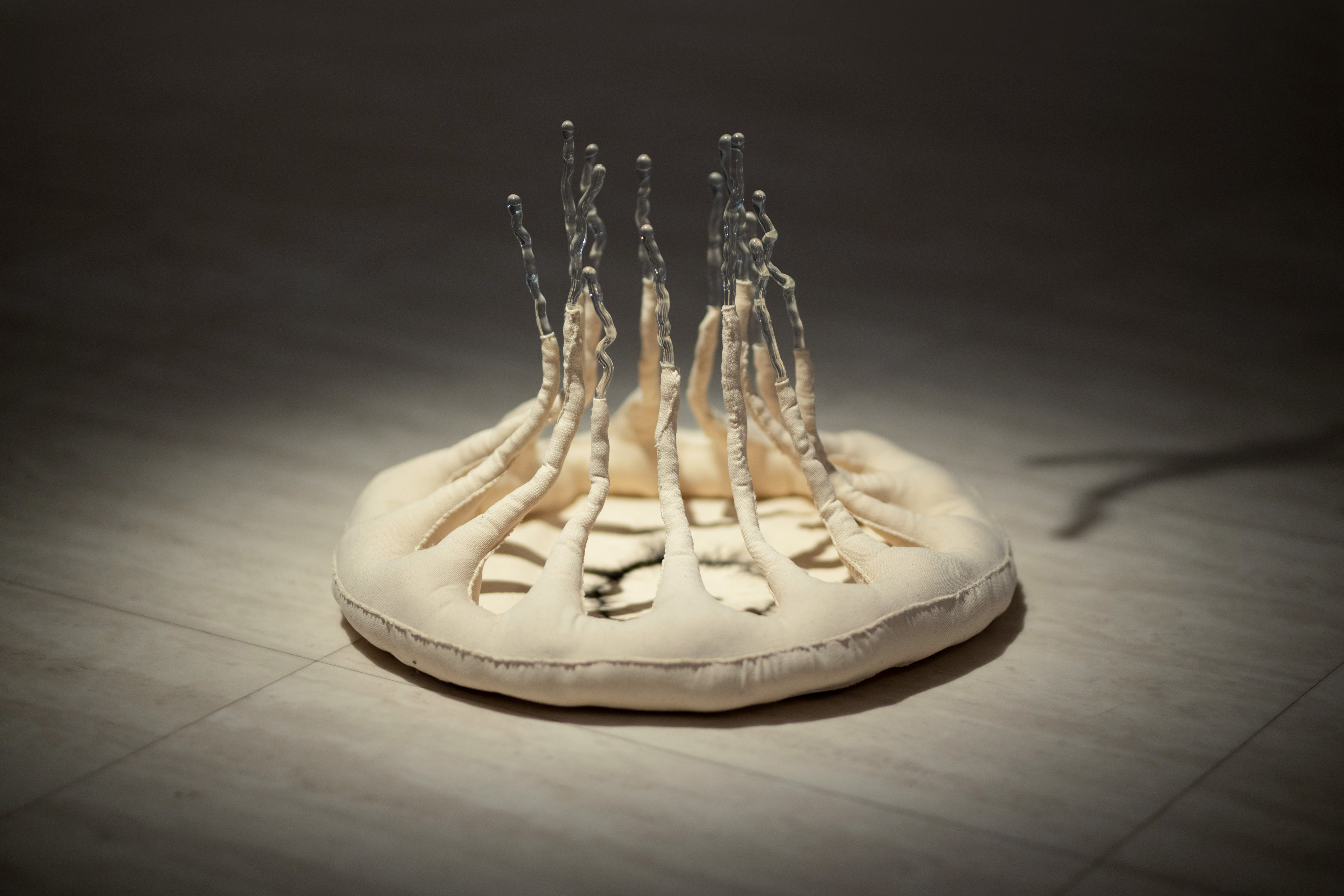
Drop-catcher
borosilicate glass, cotton canvas, ink, cotton whool
65x65x68 cm
2025
The beaten track is a metaphor for habit, of cultural and perceptual conditioning, which confines the world to a recognizable order of forms. Beyond this lies a departure from order, a transgression of the boundaries of perception, knowledge, and meaning, a mapping of side roads, blind spots, and unfamiliar spaces. The international group exhibition Access Is off the Beaten Track seeks inroads to these. The exhibits open up spaces and experiences where the perception of reality is disrupted and certainty is replaced by the strangeness lurking within the familiar.
In his book The Weird and the Eerie, British philosopher, cultural researcher, and critic Mark Fisher (1968–2017) distinguishes between two modes of perception and existence that reflect the anxieties of modernity and late capitalist culture. The words weird and eerie are difficult to translate – their Hungarian counterparts range over “strange,” “odd,” “creepy,” and “ominous” – but in Fisher’s interpretation, both of these phenomena cause the subject to lose its centralized role under the influence of some peculiar force and consequently changes its perception of the order of the world. It falls under the influence of something that is beyond its basic perception, interpretation, and experience.
Our exhibition takes this distinctive experience as its point of departure and attempts to make its various forms perceptible and accessible without claiming to capture it in its entirety or seeking to illustrate it exhaustively. Rather, it attempts to reveal a pattern of sorts in relation to the metaphysical, psychological, and political instability that defines contemporary experience.
In recent years, the stylistic features and motifs of the Gothic have become increasingly prevalent in the visual arts; artistic representation, aiming to address the self-definition and the internal processes of humans, as well as the external threats to the human world, often finds forms and narrative modes in the aesthetic tools of fantasy and horror. Decay, the instability of the body and matter at large, and the perception of hidden and invisible forces in art are symptomatic expressions of a collective destabilization that affects the subject, identity, the environment, and our perception of reality alike. Today, the Gothic and the aesthetic experiences closely associated with it are metaphors not so much for an uncanny, unburied past, but for an uncertain perception of reality in the present. The exhibition seeks to explore this contemporary restlessness, the mental and physical spaces defined by absence, tension, and fragmentation.
Fisher’s analysis ultimately arrives at the so-called eerie calm state, which occurs when confrontation with the unknown no longer evokes fear but manifests itself in the form of a peculiar calmness. Eerie calm carries within it the possibility of overcoming shock: the realization that stepping into the unknown, vanishing and dissolving into it, can also be the beginning of a new way of perceiving and being. The "Access is off the beaten track " exhibition attempts to open a gateway to an immersion into the unknown, towards the aesthetics of vanishing."
Patrik Steinhauser (curator)